Rethinking Life's Origins Through Ancient Chemical Evolution
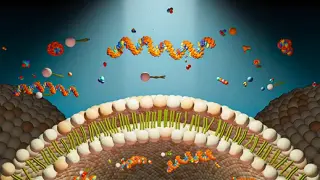
Scientists are exploring the 200 million years between Earth's formation and the emergence of the first single-celled organisms, focusing on how simple molecules transitioned into self-sustaining, evolving systems. This period marks a critical window when chemistry gave rise to biological processes like metabolism, reproduction, and environmental interaction. Researchers are redefining life’s beginnings by studying how molecular networks could have developed complexity without modern DNA or cells.
Around 4.6 billion years ago, Earth formed from a collapsing cloud of gas and dust, becoming a molten, meteorite-battered world before cooling into acidic oceans under a pink CO₂ sky. For approximately 300 million years—roughly 200 million years after Earth’s formation but before the first single-celled organisms appeared—conditions stabilized enough for chemistry to begin evolving toward biology. This pivotal window, now central to origins-of-life research, marks the transition from nonliving molecules to self-sustaining, evolving systems capable of metabolism, reproduction, and environmental interaction. Scientists like William Schopf of UCLA and Betül Kaçar of the University of Wisconsin, Madison, emphasize that this era is not just a gap in the fossil record but a dynamic phase where molecular networks may have developed complexity without modern DNA or cellular structures. The field has long been divided over whether RNA, lipids, proteins, or metabolites came first, leading to decades of debate and what some called a “crisis” in the discipline. However, recent shifts reflect a departure from singular-molecule theories toward systems-level thinking, where life is defined not by specific molecules but by function—information storage, imperfect replication, and adaptation. This new generation of researchers combines synthetic biology, computational modeling, and lab experiments with ancient Earth-like conditions to test how such systems could emerge and persist. The Soviet biochemist Alexander Oparin laid early groundwork in 1924, envisioning a convergence between chemistry and biology, while Stanley Miller’s 1952 experiment demonstrated that organic molecules could form spontaneously under primordial conditions. Still unresolved is how these prebiotic processes became stable, heritable systems capable of long-term evolution—what exactly triggered the leap from chemistry to biology remains unknown.
The renewed focus on life’s origins may influence synthetic biology, biotechnology, and astrobiology by reshaping how scientists design artificial life forms or search for extraterrestrial biosignatures. If molecular networks can evolve complexity without DNA or cells, it could expand the definition of life, potentially altering how we assess habitability on exoplanets or interpret potential biosignatures in ancient rocks. This shift may also impact drug discovery and materials science, where understanding self-organizing systems could inspire new catalysts or adaptive materials. Historically, the Miller-Urey experiment reshaped scientific expectations about prebiotic chemistry, much like today’s work could redefine what constitutes a “living” system. While not yet leading to commercial products, this research may eventually inform AI-driven models of evolutionary pathways in molecular systems—tools that could accelerate discovery in fields like metabolic engineering or personalized medicine. What remains uncertain is whether these theoretical advances will translate into practical applications within the next decade. The broader impact may be cultural: as society grapples with AI and synthetic life, understanding life’s emergence could deepen public engagement with science, fostering a more nuanced view of what it means to be alive. Watch for how institutions like NASA or private space ventures incorporate these evolving definitions into their search strategies—could redefine the criteria for detecting alien life.