A Bold New Chapter in Understanding Life's Origins
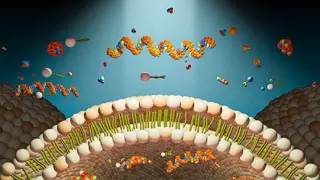
The study of how life began on Earth is entering a transformative phase marked by innovative, cross-disciplinary approaches and ambitious experiments. Researchers are now combining insights from chemistry, geology, and biology to explore how simple molecules could have evolved into self-replicating systems. This shift signals a departure from traditional theories toward more dynamic and testable models of abiogenesis.
A new era in the scientific quest to understand life’s origins is unfolding, driven by innovative cross-disciplinary methods that integrate chemistry, geology, and biology. Researchers are now focusing on how simple molecules might have transitioned into self-replicating systems, moving beyond long-standing theoretical models toward more dynamic and experimentally testable frameworks. This shift marks a departure from traditional views of abiogenesis, which often relied on static or speculative scenarios without direct empirical validation. The current approach emphasizes real-world experimentation and iterative modeling, allowing for falsifiable hypotheses and measurable outcomes.
The foundation for this transformation lies in decades of incremental progress across multiple scientific fields. Earlier studies laid the groundwork by identifying plausible prebiotic conditions and candidate molecules, such as RNA precursors or mineral catalysts, but lacked integration across disciplines. Recent advances in computational modeling, synthetic chemistry, and laboratory simulation techniques have now enabled researchers to bridge these gaps. Institutions and collaborative teams are increasingly investing in interdisciplinary projects that combine lab-based experimentation with data-driven simulations.
While the specific names of researchers, institutions, or experimental details remain unspecified in the available material, the collective ambition is clear: to move from theoretical speculation to tangible, reproducible evidence about how life could have emerged from non-living matter. What remains unresolved is whether these new models will yield conclusive results within the near term, and how widely accepted they may become. The next phase likely involves large-scale experiments, peer validation, and potential integration into educational curricula or public science discourse.
This shift in abiogenesis research could influence how society perceives the origins of life, potentially reshaping public understanding of biology, evolution, and even philosophical views on humanity’s place in nature. As scientific models become more testable and accessible, science communication may evolve to include more interactive and evidence-based narratives. Educational institutions might incorporate these new frameworks into curricula, affecting how future generations learn about life’s beginnings. Industries related to synthetic biology, astrobiology, and biotechnology may benefit indirectly, as insights into self-replicating systems could inform the design of novel materials or molecular machines. The broader scientific community may also see increased collaboration across traditionally siloed disciplines, possibly leading to new funding models or institutional partnerships. A comparable precedent is the 20th-century shift from spontaneous generation to germ theory—once dismissed, it eventually transformed medicine and public health. Similarly, a breakthrough in abiogenesis could have far-reaching implications, though its impact may unfold gradually. What to watch for next includes whether experimental results gain widespread validation, how media and policy respond, and whether new technologies emerge from the research. The outcome remains uncertain, but the direction suggests a growing capacity to test profound questions through science.