How Cell Membranes May Have Kickstarted Life on Earth
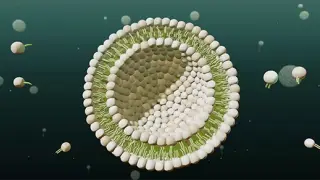
New research explores the idea that lipid-based bubbles—simple membranes—could have been the foundational step in life's origin by concentrating early chemicals and enabling evolution before complex molecules like DNA existed. These primitive containers may have not only protected early biochemistry but also passed on traits through physical stability, suggesting a form of prebiotic inheritance. This 'lipid-first' theory challenges traditional views by placing membranes at the heart of life’s emergence.
In 2026, Quanta Magazine published an explainer titled “The Case for a Bubble at Life’s Start,” advancing the lipid-first hypothesis for the origin of life, a theory first proposed in the 1990s by Doron Lancet and Daniel Segrè. Their 2000 computer model demonstrated that self-assembling lipid bubbles could maintain stable internal chemistries, pass on compositional traits to daughter bubbles through non-DNA-based inheritance, and undergo natural selection—key requirements for evolution. The model relied on hydrophobic-hydrophilic molecules forming spheres in early Earth puddles, where mutually reinforcing chemical loops (like A producing B, which in turn produces A) could sustain and replicate within the bubble’s confines. These lipid-based compartments, capable of growth and division, offered a plausible path for life to emerge before complex molecules like RNA or DNA existed. The theory challenges the long-dominant “RNA world” hypothesis by placing membranes—not genetic molecules—at the heart of life’s inception. Researchers such as Bruce Damer from UC Santa Cruz emphasize that physical enclosure was essential for concentrating early biochemistry, suggesting that self-enclosure may be life’s foundational trick. However, recent skepticism questions whether lipids were necessarily the first building blocks; some scientists argue that other amphiphilic molecules could have formed similar compartments, leading to a broader “compositional inheritance” framework rather than a strict lipid-world model.
This narrative could reshape how society understands life’s beginnings, influencing science education, public perception of biology, and even astrobiology research priorities. If membrane-based systems predate genetic molecules, it may shift the search for extraterrestrial life toward environments with conditions favoring self-assembly over complex biochemistry—potentially expanding the habitable zone in planetary exploration. Institutions like NASA or ESA may adjust mission designs to prioritize detecting lipid-like structures on Mars or icy moons. In the long term, this perspective could inspire new approaches in synthetic biology and AI-driven molecular design, where researchers aim to create artificial cells from self-organizing components rather than programmed DNA sequences. A comparable precedent is the shift from protein-first to RNA-world thinking in the 1980s, which transformed origins-of-life research. The current debate may similarly catalyze innovation in lab-grown protocells and bioengineering. What remains uncertain is whether such systems can achieve sufficient complexity to evolve into true life forms under natural conditions. Researchers will need to test these models experimentally, particularly in simulated early Earth environments—something still largely theoretical. The next phase could involve AI-assisted simulations of prebiotic chemistry, where machine learning helps identify plausible pathways from simple molecules to self-replicating systems.