Metabolic Cycles May Have Kickstarted Life Before Genes Existed
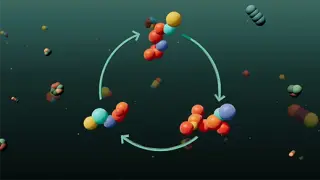
Scientists propose that self-sustaining chemical reaction cycles, driven by energy from geochemical sources, could have initiated life before the emergence of genes or cells. William Martin, an evolutionary biologist at Heinrich Heine University Düsseldorf, argues that metabolism’s ability to generate and sustain complex molecules through continuous energy flow may have been fundamental to life's origin. This theory suggests that metabolic pathways predated genetic information storage, forming the basis for early biochemical systems.
In November 2026, evolutionary biologist William Martin from Heinrich Heine University Düsseldorf advanced a theory that metabolic cycles—self-sustaining chemical reactions driven by geochemical energy—may have preceded genetic systems in life’s origin. His work builds on decades of inquiry, beginning with Harold Morowitz’s 1968 proposal that energy flow organizes chemical systems thermodynamically. The hypothesis centers on hydrothermal vents, first discovered in the late 1970s, where conditions like high temperature and pressure, combined with iron-sulfide minerals, could have catalyzed early reactions. In 2020, Martin’s team demonstrated that carbon dioxide, hydrogen, nickel, and iron minerals—common at such vents—could produce formate, acetate, and pyruvate, key intermediates in the acetyl-CoA pathway, without requiring enzymes or RNA. Simultaneously, Ramanarayanan Krishnamurthy at Scripps Research showed that pyruvate and glyoxylate could form components of the reverse citric acid cycle under milder, more plausible early-Earth conditions. These experiments suggest that complex metabolic networks might have emerged before genetic coding, challenging the traditional RNA-world hypothesis. The key players include Martin’s group in Germany, Preiner at the Max Planck Institute, and Krishnamurthy’s team at Scripps, all seeking to understand how life’s first energy-harnessing systems could have arisen from non-living chemistry. What remains unresolved is whether these reactions could sustain themselves long enough to evolve complexity without genetic replication, and whether such pathways were truly universal or limited to specific vent environments.
This research may influence how society conceptualizes the origins of life, potentially reshaping science education and public understanding of biology’s foundational principles. If metabolism predates genetics, it could shift biotechnology and synthetic biology toward designing life-like systems based on energy-driven cycles rather than genetic templates. Industries focused on artificial life or self-replicating materials might find new inspiration in these geochemical models. A comparable precedent is the 1980s RNA world hypothesis, which similarly redefined origins research by prioritizing information molecules over metabolism—now itself being reconsidered. The current shift could lead to renewed investment in prebiotic chemistry and deep-sea exploration, particularly for hydrothermal systems on Earth or extraterrestrial bodies like Europa. However, the broader societal impact remains speculative: while the findings may inspire new scientific frameworks, they are unlikely to immediately affect medicine, agriculture, or policy. What to watch for is whether these metabolic models gain traction in mainstream biology curricula or influence space missions searching for life beyond Earth—could such missions prioritize detecting energy gradients over genetic signatures? The implications are still unfolding.