Could Self-Replicating RNA Have Kickstarted Life on Earth?
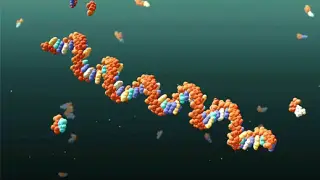
Scientists explore the hypothesis that life began with RNA molecules capable of both storing genetic information and catalyzing their own replication, solving the paradox of how early life could function without modern proteins or DNA. This 'RNA world' theory suggests that RNA preceded both DNA and proteins in the evolutionary timeline. The idea remains a leading explanation for life's origins, though challenges remain in demonstrating how such molecules could have formed and sustained themselves under early Earth conditions.
In 2026, physicist-turned-biologist Walter Gilbert’s long-standing “RNA world” hypothesis gained renewed attention through a series of experiments exploring how self-replicating RNA might have emerged on early Earth. The central idea is that RNA, capable of both storing genetic information and catalyzing chemical reactions as ribozymes, could have preceded DNA and proteins in life’s evolutionary timeline. This theory arose from the 1980s discovery that certain RNA molecules can act as enzymes—catalysts—challenging the assumption that only proteins could perform such roles. A pivotal moment came in 1996 when researchers created a ribozyme capable of stitching nucleotides into new RNA strands, suggesting self-replication was chemically plausible. However, challenges remain: Gerald Joyce and colleagues at the Salk Institute found in 2019 that even small evolutionary changes in such ribozymes often destroyed their catalytic function, making sustained replication difficult. Moreover, while lab-created ribozymes can be large (hundreds of nucleotides), natural prebiotic conditions only produce short RNA fragments—around 10 to 15 nucleotides—raising doubts about how functional, self-replicating molecules could have formed spontaneously. In contrast, Philipp Holliger’s team at the MRC Laboratory of Molecular Biology recently identified a small, 45-nucleotide ribozyme named QT45 that can catalyze RNA synthesis despite its size, offering renewed hope that simpler, more plausible pathways to an RNA world may exist. The unresolved question remains: how could such molecules have formed and stabilized under early Earth conditions without modern cellular machinery?
The RNA world hypothesis, if substantiated, could reshape our understanding of life’s origins, influencing fields from astrobiology to synthetic biology. If self-replicating RNA can be shown to emerge under prebiotic conditions, it may inform the search for extraterrestrial life by expanding the range of environments considered habitable. In biotechnology, insights into ribozyme function could lead to new tools for gene editing or drug development, particularly in designing RNA-based therapeutics. The broader impact may mirror that of the discovery of CRISPR—initially a curiosity in bacterial immunity, now revolutionizing genetic engineering. While no immediate commercial applications are evident, research into self-replicating molecules could eventually support efforts to create artificial life forms or autonomous molecular systems. What remains uncertain is whether these lab-based findings can be scaled to realistic prebiotic scenarios. The next critical step—demonstrating spontaneous formation and stability of functional RNA under early Earth conditions—could either validate the theory or prompt a shift toward alternative models, such as metabolism-first hypotheses. Scientists may soon turn to computational modeling or planetary exploration data to test these ideas further.