Pakistani pilot Muhammad Zeeshan Ali to become first international visitor to China’s Tiangong space station
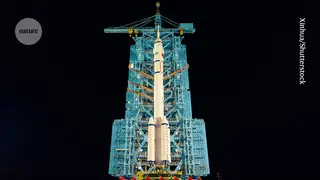
Pakistani military pilot Muhammad Zeeshan Ali is set to travel to China’s Tiangong space station aboard the Shenzhou-24 spacecraft on 25 November 2026, becoming the first foreign astronaut to visit the facility. He will join two Chinese taikonauts for a week-long mission, marking a significant milestone for both Pakistan’s space ambitions and China’s growing role in international space cooperation. The launch, scheduled from the Jiuquan Satellite Launch Centre, underscores China’s expanding capabilities in manned spaceflight and its efforts to position itself as a leading space power.
On 25 November 2026, Pakistani military pilot Muhammad Zeeshan Ali is scheduled to launch aboard China’s Shenzhou-24 spacecraft from the Jiuquan Satellite Launch Centre in northwest China, becoming the first foreign astronaut to visit the Tiangong space station. The mission, which will last approximately one week, involves docking with the Tiangong module around 3.5 hours after launch, following a launch window at 08:18 am local time. Ali will join two Chinese taikonauts, marking a historic milestone in international space cooperation. His training in Beijing over the past seven months included learning Mandarin, reflecting the deep integration required for such a mission. Ali stated that his flight symbolizes the aspirations of Pakistan’s 250 million people, underscoring the national significance of the endeavor. This event follows China’s growing role in manned spaceflight, including the successful launch of its Mars mission, and signals its ambition to become a leading space power. The mission also highlights Pakistan’s emerging space ambitions, with experts like Wajiha Iqbal of the University of Münster noting that the partnership enables Pakistan to conduct meaningful scientific research in space. The collaboration is facilitated by China’s Center for China and Globalization, which views the initiative as part of broader foreign policy goals. What remains unresolved is the full scope of scientific experiments Ali will conduct, and whether this mission will lead to further international crew exchanges or long-term bilateral space agreements.
This mission could mark a shift in the global space landscape, where China increasingly positions itself as a hub for international collaboration, especially as U.S.-led initiatives face limitations due to geopolitical tensions. By welcoming a foreign astronaut from a non-aligned nation, China may be expanding its soft power and attracting other countries to its space infrastructure, potentially reshaping the dynamics of space diplomacy. Pakistan’s participation may inspire other developing nations to pursue similar partnerships, possibly leading to a multipolar space ecosystem. The precedent of the International Space Station (ISS), where collaboration among the U.S., Russia, Europe, Japan, and Canada enabled decades of shared research, may be mirrored here, though with a different geopolitical alignment. However, unlike the ISS, which operated under a framework of transparency and multilateral governance, China’s space program remains more state-controlled, raising questions about data sharing, access, and long-term sustainability. The success of this mission may prompt other nations to seek similar access to Chinese space platforms, but it also raises concerns about dependency on a single nation’s infrastructure. What to watch for next includes whether this will lead to formalized science missions, joint research projects, or even future crew rotations. The broader impact may be a reconfiguration of global space alliances, with China emerging as a key player in enabling international access to space—though the full implications for scientific collaboration, equity, and geopolitical balance remain uncertain.