Vulcan Rocket Failure Deals Major Blow to U.S. Space Ambitions
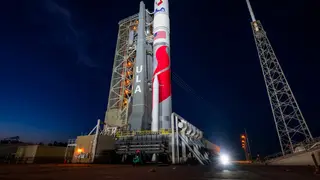
The United Launch Alliance's Vulcan rocket suffered a mission-ending malfunction just 10 minutes after launch on November 15, destroying Amazon’s Leo broadband satellites and marking the company’s first total failure. The setback impacts NASA’s lunar ambitions, U.S. Space Force operations, and Amazon’s efforts to compete with SpaceX. The failure follows prior issues with the rocket’s Northrop Grumman booster and Blue Origin’s BE-4 engines, which were also involved in a May 2026 New Glenn explosion.
On November 15, 2026, United Launch Alliance’s (ULA) Vulcan rocket suffered a mission-ending failure just 10 minutes after liftoff from Space Launch Complex 41 at Cape Canaveral Space Force Station, Florida. The rocket, carrying Amazon’s Leo broadband satellites, experienced a critical anomaly during its first stage flight, with the BE-4 engines firing 30 seconds longer than planned—indicating underperformance. ULA later confirmed that the issue stemmed from inadequate fuel supply to the BE-4 engines, not engine malfunction itself. The vehicle failed to achieve orbit, resulting in the destruction of the payload and marking ULA’s first total mission failure since its inception. This failure followed earlier setbacks, including a February 2026 flight where a Northrop Grumman solid rocket booster exhibited problems, and the May 2026 explosion of Blue Origin’s New Glenn rocket, which also used BE-4 engines. The failure impacts multiple stakeholders: Amazon’s Leo broadband initiative is now significantly delayed, NASA’s Artemis lunar program faces potential setbacks due to reliance on Vulcan’s Centaur V upper stage and Blue Moon lander’s dependence on New Glenn, and the U.S. Space Force’s operational launch cadence is disrupted. ULA, Boeing, and Lockheed Martin jointly own the company, while Blue Origin, backed by Jeff Bezos, supplies the BE-4 engines. Both companies are actively investigating the root cause, with NASA and SpaceX offering support. The outcome of the investigation remains unknown, and no timeline has been set for a return to flight.
This failure could undermine confidence in U.S. launch capabilities at a pivotal moment when competition with China in space is intensifying. Amazon’s Leo service, intended to rival SpaceX’s Starlink, now faces further delays, potentially weakening its market position and affecting global broadband access in underserved regions. The U.S. Space Force may face constraints in deploying critical surveillance and communication satellites, while NASA’s Artemis program—already behind schedule—could experience additional delays if the Centaur V or BE-4 engine issues are systemic. The situation echoes the 2015 failure of the Antares rocket, which grounded NASA’s ISS resupply missions and led to a temporary reliance on Russian Soyuz. That event reshaped U.S. launch policy and spurred investment in commercial alternatives. Similarly, this incident may accelerate U.S. government efforts to diversify launch providers or fast-track alternative systems. What to watch for: whether the BE-4 engine flaw is isolated or indicative of broader design or manufacturing issues, and how quickly ULA can restore confidence through transparent investigation and successful test flights.