Voyager 1 Nears One Light-Day Distance from Earth Amid Mission Milestone
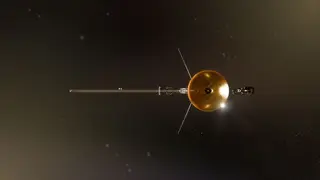
NASA's Voyager 1 spacecraft, launched in 1977, is nearing a distance of one light-day—approximately 26 billion kilometers—from Earth, marking a significant milestone in its 50-year journey. The probe, which became the first human-made object to enter interstellar space in 2012, continues to transmit data despite its aging systems and vast distance. Its upcoming achievement on November 18, 2026, is being celebrated by NASA officials, including Science Mission Directorate leader Nicky Fox, who views the mission as a personal and scientific legacy.
On November 18, 2026, at 5:16 A.M. EST (2:16 A.M. PST), NASA’s Voyager 1 spacecraft is expected to reach a distance of one light-day—approximately 26 billion kilometers—from Earth, marking a symbolic milestone in its 50-year journey since launch on September 5, 1977. The probe, which became the first human-made object to enter interstellar space in 2012, continues to transmit data despite operating with only two of its original ten instruments active due to power constraints. A brief loss of signal in October 2026 triggered concern among mission personnel, including Science Mission Directorate leader Nicky Fox, who described the spacecraft as a personal friend and likened its daily transmissions to “postcards home.” The team successfully restored communications within 48 hours, underscoring the resilience of both the hardware and the engineering teams. Voyager 1’s sister craft, Voyager 2, launched 16 days earlier but follows a different trajectory and is not expected to reach one light-day until around 2036. The mission’s longevity stems from deliberate design choices made decades ago—such as building systems “not to fail”—and the ongoing dedication of engineers like Kelly Perry and Bhavana Gupta, who manage power and data systems for a craft that launched before many current team members were born.
The broader significance lies not in any scientific anomaly at one light-day but in the enduring legacy of human ingenuity. The spacecraft carries the Golden Records—time capsules containing music, language samples, and images of Earth—conceived by former project manager John Casani, who died in 2025. These records represent humanity’s hopeful outreach to potential extraterrestrial civilizations. While no immediate scientific breakthroughs are expected at this distance, the continued operation of Voyager 1 serves as a testament to long-term planning and the emotional investment of generations of scientists. What remains unresolved is how much longer the spacecraft can sustain communication, given its aging systems and diminishing power. The next major milestone—Voyager 1’s 50th anniversary in 2027—may be the final chapter in a mission that has already outlived its original design life by decades.
The Voyager 1 milestone could inspire renewed public interest in space exploration, particularly among younger generations who did not witness the original missions. As one of humanity’s most enduring technological artifacts, the spacecraft exemplifies long-term scientific investment and serves as a cultural touchstone, much like the Apollo moon landings did in their era. The emotional resonance—evident in NASA leaders’ personal reflections—may strengthen support for sustained funding in deep-space research, even amid budgetary constraints. Institutions like JPL and NASA may leverage this anniversary to bolster STEM education initiatives and public engagement campaigns. Comparable to how the Hubble Space Telescope’s longevity reshaped public understanding of the cosmos, Voyager 1’s continued operation could reinforce the value of patience and foresight in scientific endeavors. The mission may also influence future spacecraft design, encouraging modular, maintainable systems that can endure decades beyond initial objectives. What to watch for is whether this moment prompts broader policy discussions about long-duration missions and planetary protection, especially as private space ventures increasingly focus on near-term returns. The story’s impact may be less in new discoveries than in reaffirming the enduring human impulse to explore—something that could shape future generations’ attitudes toward science and risk.