BepiColombo Mission Set to Orbit Mercury After Eight-Year Journey
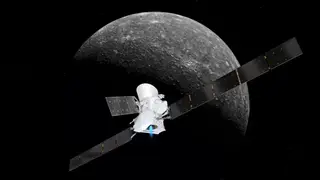
The joint European Space Agency and Japan Aerospace Exploration Agency mission BepiColombo is scheduled to enter orbit around Mercury on November 21, 2026, after an eight-year, six-billion-mile journey involving multiple planetary flybys. This marks the first spacecraft to orbit Mercury since NASA's MESSENGER mission and could pave the way for the first-ever lander on the planet. The mission honors Italian scientist Giuseppe Colombo, who pioneered the orbital mechanics needed to reach Mercury.
On November 21, 2026, the BepiColombo mission—comprising the Mercury Planetary Orbiter (MPO) from the European Space Agency (ESA) and the Mercury Magnetospheric Orbiter (Mio) from Japan Aerospace Exploration Agency (JAXA)—successfully entered orbit around Mercury after an eight-year journey spanning approximately six billion miles. The spacecraft, launched together in October 2018, relied on nine planetary flybys—two of Venus and six of Mercury—to gradually slow their trajectory and achieve orbital capture, a maneuver made possible by the orbital mechanics pioneered by Italian scientist Giuseppe Colombo, after whom the mission is named. This marks the first spacecraft to orbit Mercury since NASA’s MESSENGER mission (2011–2015), and the first time two spacecraft have simultaneously orbited the planet. The separation of MPO and Mio, scheduled for December 9, 2026, will be a critical and unprecedented maneuver, with the two craft moving into distinct orbits—MPO into a two-hour orbit and Mio into a nine-hour orbit—enabling comprehensive polar mapping of Mercury’s surface, especially the poorly observed south pole. The mission aims to study Mercury’s large iron core, extreme temperature variations, tenuous exosphere, and the presence of water ice in permanently shadowed polar craters, which may provide clues to the origins of water on Earth. Scientists like Sean Solomon and Carolyn Ernst are particularly interested in understanding the planet’s volcanic history and the mysterious hollows that dot its surface. The mission’s success hinges on overcoming a year-long delay caused by a thruster malfunction, and while the orbital insertion was achieved, the full scientific payoff remains to be seen.
BepiColombo’s arrival at Mercury could significantly advance planetary science by offering the most detailed observations of the innermost planet in decades, potentially reshaping models of terrestrial planet formation and evolution. The mission’s findings may influence future space exploration strategies, particularly regarding how to navigate extreme thermal environments and achieve precise orbital mechanics in high-gravity, high-radiation zones near the Sun. The collaboration between ESA and JAXA exemplifies growing international cooperation in deep space missions, which may encourage similar partnerships in upcoming lunar or Martian endeavors. While no direct commercial applications are expected, the technologies developed—such as advanced thermal shielding and autonomous navigation systems—could benefit future satellite constellations or deep-space probes. A comparable precedent is NASA’s MESSENGER mission, which transformed our understanding of Mercury and laid the groundwork for BepiColombo. The current mission may similarly catalyze a new era of inner solar system exploration, possibly paving the way for a future lander mission, though such a step remains speculative. What to watch for next includes the release of high-resolution images and magnetic field data, which could reveal new insights into Mercury’s geologic activity and internal structure. The data may also inform broader questions about planetary habitability and the delivery of volatiles to rocky worlds, with implications for astrobiology and Earth’s own history.