BepiColombo Successfully Enters Mercury Orbit After Eight-Year Journey
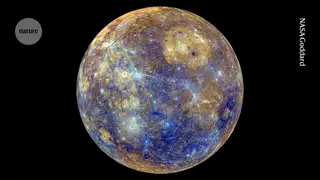
The joint European and Japanese BepiColombo mission has successfully entered orbit around Mercury, becoming only the second spacecraft to do so after NASA’s MESSENGER. The spacecraft, composed of two probes—one built by ESA and the other by JAXA—will separate in December to follow distinct orbits, enabling detailed study of Mercury’s magnetic field and surface. The mission’s X-ray imaging spectrometer, MIXS, has already been tested on the Crab Nebula, marking the first X-ray imaging instrument on an interplanetary mission.
On 21 November 2026, the BepiColombo spacecraft, a joint mission between the European Space Agency (ESA) and Japan Aerospace Exploration Agency (JAXA), successfully entered orbit around Mercury, marking the second time a spacecraft has achieved this feat after NASA’s MESSENGER mission (2011–2015). The mission, launched in October 2018, required an eight-year journey involving multiple gravity assists from Earth, Venus, and Mercury itself to gradually slow down and avoid overshooting the planet due to its strong solar gravity. The two probes—ESA’s Mercury Planetary Orbiter (MPO) and JAXA’s Mercury Magnetospheric Orbiter (MIO)—will remain attached until 9 December, when MIO will begin its elliptical orbit between 500 km and 11,000 km above Mercury’s surface to study the planet’s magnetic field and solar wind interactions. MPO will then descend to a lower orbit of 400–1,500 km by March 2027 to conduct detailed surface observations. A key instrument, the Mercury Imaging X-ray Spectrometer (MIXS), has already been tested on the Crab Nebula, making it the first X-ray imaging spectrometer deployed on an interplanetary mission. Emma Bunce, a leading mission scientist from the University of Leicester, emphasized the mission’s technical challenges, noting that reaching Mercury requires more energy than reaching the outer Solar System. The mission’s success reflects years of international collaboration and careful orbital planning.
BepiColombo’s arrival at Mercury could significantly advance planetary science by providing the most detailed data yet on the innermost planet’s magnetic field, surface composition, and interaction with solar wind. This may refine models of planetary formation and help explain why Mercury has such a strong magnetic field despite its small size. The mission’s use of AI-assisted data analysis—though not explicitly detailed in the article—may serve as a model for future space missions where real-time processing of vast datasets becomes essential. Comparable to NASA’s MESSENGER, which revolutionized our understanding of Mercury in the 2010s, BepiColombo may trigger a new wave of research and inspire follow-up missions. The success of MIXS could also influence the design of future X-ray instruments for deep space, potentially opening new observational windows in astrophysics. However, the long-term impact depends on how quickly data is processed and shared with the global scientific community. What remains to be seen is whether the mission will uncover unexpected phenomena—such as previously unknown surface features or magnetic anomalies—that could challenge current theories. The next phase, beginning in December 2026, will be critical in determining how effectively the dual-orbit strategy delivers complementary insights.