Voyager 1 Crosses One Light-Day Mark in Deep Space Journey
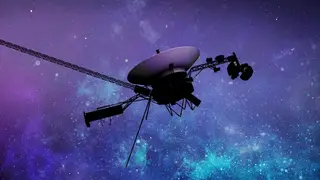
On November 18, 2026, Voyager 1 became the first human-made object to reach a distance of one light-day—approximately 16 billion miles—from Earth, marking a significant point in its interstellar voyage. Launched in 1977 by NASA, the spacecraft used gravitational assists from Jupiter and Saturn to achieve its high speed and crossed into interstellar space in 2012. Now operating on dwindling power from plutonium-powered RTGs, only two of its original instruments remain functional.
On November 18, 2026, Voyager 1 became the first human-made object to reach a distance of one light-day—approximately 16 billion miles (26 billion kilometers)—from Earth, marking a symbolic and technical milestone in deep space exploration. At this distance, a radio signal from Earth takes 24 hours to reach the spacecraft, and another 24 hours for a response to return, underscoring the vastness of interstellar space. Launched by NASA in September 1977, Voyager 1 used gravitational assists from Jupiter and Saturn in 1979 and 1980 to accelerate beyond the solar system, eventually crossing the heliopause in August 2012 and becoming the first spacecraft to enter interstellar space. Now powered by three plutonium-fueled radioisotope thermoelectric generators (RTGs), the probe produces less than half its original power—down from 470 watts at launch—and only two of its original instruments remain functional: a plasma-wave detector and a magnetometer. By around 2036, its power levels are expected to drop below the threshold needed to communicate with Earth.
The mission’s enduring legacy is rooted in its dual purpose: scientific exploration and cultural messaging. Voyager 1 carries the Golden Record, a 12-inch gold-plated copper disk containing 115 images, global music, greetings in 55 languages, and a pulsar map pointing to Earth. Designed by a team led by Carl Sagan and others at NASA’s Jet Propulsion Laboratory (JPL), the record was intended as a time capsule of human civilization. The spacecraft’s twin, Voyager 2, carries the same record, while earlier Pioneer 10 and 11 carried simpler engraved plaques. Though the data capacity of the Golden Record is minimal by modern standards—roughly 1,000 times less than a typical smartphone—the mission’s symbolic value remains profound. The future of such missions is uncertain, as no follow-up interstellar probes are currently planned, and the technical and financial challenges of long-duration deep space missions remain significant.
The milestone of Voyager 1 reaching one light-day from Earth underscores humanity’s enduring ambition to explore beyond the solar system, even as the spacecraft’s operational life nears its end. While the mission itself is nearing termination due to dwindling power, its cultural and philosophical impact may outlive its technical capabilities. The Golden Record, as a gesture of cosmic outreach, reflects a deep-seated human desire to be acknowledged in a seemingly silent universe—a sentiment that could influence future efforts in space archaeology, interstellar messaging, and public engagement with science. Comparable to the Voyager mission’s legacy, the 1974 Arecibo message was a one-time transmission aimed at potential extraterrestrial intelligence, but Voyager’s physical journey makes it a more enduring symbol. The story may inspire renewed interest in long-duration space missions, particularly as advances in AI and autonomous systems could one day enable probes to operate for centuries without human intervention. Institutions like NASA, MIT, and Boston University, which contributed to Voyager’s scientific instruments and data interpretation, may see increased support for next-generation interstellar concepts. However, the absence of a follow-up mission suggests that societal and political will for such ventures remains fragile. What may emerge in the next decade is not a new Voyager, but perhaps a network of smaller, AI-driven probes—possibly funded by private entities—carrying digital archives of human culture, raising ethical questions about what we choose to represent and how we define our place in the cosmos.