Pudu Robotics Bridges Commercial Deployment and Embodied AI at European Summit
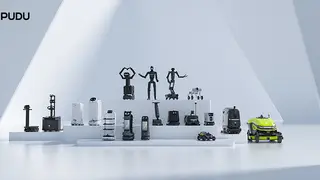
Pudu Robotics highlighted its strategic shift from specialized commercial robotics to broader embodied intelligence at its European Partner Summit in Amsterdam, emphasizing the integration of AI across diverse robot types. The company, which has deployed over 130,000 robots in more than 85 countries, stressed that real-world scalability requires robust hardware, perception systems, fleet management, and service infrastructure. Its 'One Brain, Multiple Embodiments' approach aims to unify intelligence across delivery, cleaning, industrial, and lawn care robots.
On November 4, 2026, Pudu Robotics convened its European Partner Summit in Amsterdam under the theme “AI in Action: Scaling Impact Across Europe — Together,” marking a pivotal shift in its strategic direction. The company, which has deployed over 130,000 robots across more than 85 countries and serves over 50,000 customers in more than 1,000 cities, unveiled its “One Brain, Multiple Embodiments” approach as a framework for unifying AI intelligence across diverse robot types. This includes delivery, cleaning, industrial, lawn care, and home robotics, with real-world deployments at major clients like Denner (Swiss supermarket chain), Marriott, Van der Valk hotels, and Paris Charles de Gaulle Airport. The shift reflects a maturation from specialized commercial robotics—where Pudu had built operational expertise—to broader embodied AI, leveraging field-tested reliability and infrastructure. The foundation for this evolution lies in PuduFM, an embodied intelligence foundation model emphasizing physical intuition, and PuduAgent, a universal AI agent platform enabling reusable skills across platforms. These technologies support three core domains: navigation, manipulation, and interaction, allowing hardware to remain task-specific while sharing intelligent capabilities. Felix Zhang, Pudu’s founder and CEO, emphasized that future growth hinges not just on advancing robot capabilities, but on improving deployability, adaptability, and commercial scalability. What remains unresolved is how effectively this shared intelligence model can be scaled across vastly different physical forms—such as humanoid robots and mobile platforms—without compromising performance or safety, and whether the infrastructure required for fleet management and service support can keep pace with global expansion.
Pudu Robotics’ pivot toward embodied AI could reshape how physical automation is deployed in public and commercial spaces, potentially accelerating the integration of robots into daily life across Europe and beyond. By unifying intelligence across robot types, the company may lower the barrier to entry for new applications in sectors like hospitality, logistics, and urban maintenance, where adaptability and reliability are paramount. This model could influence broader industry trends, similar to how cloud computing enabled scalable software deployment, by creating a reusable AI backbone that reduces development costs and speeds innovation. However, challenges remain: real-world performance depends heavily on robust perception systems, human-robot interaction protocols, and resilient service infrastructure—areas where even large-scale deployments like Pudu’s have faced hurdles. The success of this strategy may also depend on regulatory acceptance, public trust, and the ability to maintain privacy and safety in shared environments. If Pudu’s approach proves scalable, it could set a benchmark for other robotics firms aiming to move beyond task-specific machines. What to watch for next is whether this architecture can support increasingly complex, dynamic tasks—such as collaborative work with humans in unpredictable settings—without requiring full re-engineering, and how competitors respond with similar cross-platform AI frameworks.