Narwal Develops Regionally Tailored Robot Vacuums After Decade of R&D
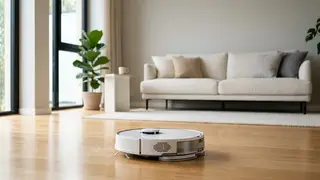
Narwal Robotics Corp., based in Shenzhen and Covina, has spent ten years developing household cleaning robots that combine vacuuming and mopping, focusing on regional market needs. The company overcame significant challenges in R&D, supply chain logistics, and algorithm development, including creating precise positioning systems for automatic mop washing. Founder and CEO Junbin Zhang aims to bring home robots to an 'iPhone moment' through embodied intelligence and cost-effective design.
Narwal Robotics Corp., headquartered in Shenzhen, China, and Covina, California, has unveiled its latest generation of robot vacuums after a decade of research and development, marking a significant milestone in consumer robotics. The company spent three years with no revenue focused solely on R&D, iterating the self-cleaning mop design over ten times before launching its first product. Its Flow 2 model achieved No. 1 status in the robot vacuum new release category on Amazon U.S. within 24 hours of launch, with a 305% year-over-year sales increase. The company has expanded into more than 30 countries and regions, serving over 6 million users, with overseas revenue growing nearly 50% between January and April 2026. Key innovations include the DualFlow tangle-free system for pet hair, a carpet deep-cleaning module that boosts performance by 40–50%, and FlowWash hot water cleaning. Narwal’s “one country, one policy” strategy has driven regional success, with product features customized for North American homes—such as extended battery life and optimized path planning for large single-family residences. Founder and CEO Junbin Zhang aims to transition robot vacuums from niche tech gadgets to essential household appliances, likening the goal to the “iPhone moment.” The company is preparing for an IPO and operates under a vertically integrated model, leveraging Shenzhen’s R&D ecosystem and Dongguan’s manufacturing capabilities.
The background reveals that Narwal emerged in a market where pioneers like iRobot Corp. struggled with sustainability, ultimately entering bankruptcy in late 2025 before being acquired. This context underscores the difficulty of scaling household robotics despite early innovation. Narwal’s strategy diverges from traditional players by rejecting “parameter stacking” and instead prioritizing user experience, embodied intelligence, and long-term quality over rapid market capture. The company’s full control over its supply chain enables faster iteration and consistent product quality, a key differentiator in an industry reliant on contract manufacturing. While iRobot is rebuilding under new ownership, Narwal positions itself as a challenger with a more sustainable, innovation-led model. What remains unresolved is whether Narwal can maintain its momentum through an IPO and scale globally without compromising its experience-first philosophy. The long-term success of its cost-reduction strategy—balancing quality with affordability—will determine if robot vacuums truly become household essentials.
Narwal’s advancements could significantly reshape consumer expectations for home automation, moving beyond basic cleaning to intelligent, adaptive systems that integrate seamlessly into daily life. By focusing on regional customization and solving specific pain points—like pet hair tangling or deep carpet cleaning—the company may set a new standard for user-centric design in smart home devices. This shift could pressure legacy brands to invest more in software and experience rather than hardware specs alone. The broader market may see a trend toward vertically integrated, innovation-driven models, especially as Chinese tech firms increasingly challenge Western dominance in consumer robotics. A comparable precedent is Apple’s transition from niche computer maker to mainstream lifestyle brand with the iPhone—Narwal may be attempting a similar cultural inflection point for home robots. However, challenges remain: scaling production without sacrificing quality, maintaining brand trust during rapid expansion, and navigating regulatory or data privacy concerns in diverse markets. The next phase will likely involve deeper integration with smart home ecosystems and potential AI-driven personalization. Whether Narwal can sustain its momentum through an IPO and global rollout remains to be seen—its success could signal a broader shift toward intelligent, embodied devices as essential household tools rather than novelty gadgets.