Remedy Robotics Tests Remote Brain Surgery Robot for Ischemic Stroke Treatment
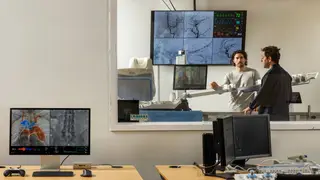
Remedy Robotics is developing the N1 System, a robotic platform enabling surgeons to perform thrombectomies remotely to treat ischemic strokes—caused by blocked blood flow—in rural and underserved areas. The system uses a game-like interface with an Xbox controller and real-time X-ray imaging, allowing operators to guide a catheter through simulated vascular pathways. The company aims to reduce the time-sensitive damage caused by untreated strokes, which can kill millions of brain cells per minute.
Remedy Robotics, based in San Francisco, is testing its N1 System—a robotic platform designed to enable remote thrombectomies for ischemic stroke patients—using a game-like interface with an Xbox controller and real-time X-ray imaging. The system allows surgeons to guide a catheter through simulated vascular pathways from a distance, aiming to reduce the time-sensitive brain damage caused by untreated strokes, which can kill millions of neurons per minute. In 2025, approximately 5 million people worldwide suffer ischemic strokes annually, and in the U.S., stroke remains the fourth leading cause of death. Currently, only about one in ten eligible patients receives a thrombectomy, largely due to geographic disparities in access to specialized care. The N1 System addresses this by enabling surgeons to operate from remote locations, potentially bringing life-saving treatment to rural and underserved hospitals where neurovascular expertise is lacking. The prototype console was tested with a plastic model containing silicone tubing simulating blood vessels, with cofounders David Bell (a former cardiac-surgery trainee) and Jake Sganga leading development. Bell emphasizes that clinical outcomes—not ergonomics or smoothness—are the ultimate measure of success. While the technology has undergone initial remote testing on patients, broader implementation hinges on reliable communications infrastructure, hospital workflows, and definitive evidence that remote procedures improve patient survival and recovery.
The N1 System could significantly expand access to time-critical stroke interventions, particularly in regions where neurovascular specialists are scarce. If proven effective, it may reshape emergency care delivery, reducing disparities between urban and rural health outcomes. This approach mirrors earlier telemedicine breakthroughs like the 2001 telesurgery demonstration by Dr. Jacques H. Marescaux, which showed remote surgery was technically feasible but faced adoption barriers due to latency and regulation. Today’s challenge is not just technical but systemic—integrating robotics into existing hospital systems, ensuring data security, and building trust among clinicians and patients. The success of the N1 could influence broader trends in autonomous medical robotics, potentially paving the way for remote interventions in other time-sensitive conditions like trauma or cardiac events. However, regulatory approval, cost-effectiveness, and long-term patient outcomes remain uncertain. What’s next may depend on clinical trial results and whether payers and health systems recognize remote robotic surgery as a standard of care.