Serve Robotics Launches Open API for Third-Party Developers to Access Its Robot Fleet
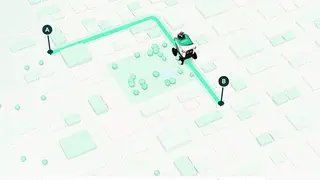
Serve Robotics has launched the AV Delivery Developer Portal, enabling developers, businesses, and AI systems to programmatically summon its fleet of over 2,000 autonomous sidewalk delivery robots. The platform includes a sandbox environment for testing applications before deploying them with live robots, aiming to lower barriers to entry for robotics innovation. The company, spun out of Uber in 2021, now opens its infrastructure to external developers after previously limiting access through third-party delivery partners.
On November 11, 2026, Serve Robotics launched the AV Delivery Developer Portal, opening its fleet of over 2,000 autonomous sidewalk delivery robots to third-party developers, businesses, and AI systems through a public API. Based in Redwood City, California, the company—originally spun out of Uber in 2021—now allows external users to programmatically summon robots for on-demand deliveries across its active service areas in more than 150 neighborhoods across 20 U.S. cities and parts of Australia. The platform includes a sandbox environment where developers can simulate robot behavior, test delivery workflows, and rehearse edge cases before deploying applications with live units. Access to real robots requires approval from Serve, but the company emphasizes that this move lowers barriers to entry for innovation in physical-world automation.
Serve’s shift marks a strategic pivot from its earlier model of exclusive partnerships with third-party delivery platforms. The company previously limited robot access to these partners, but now aims to democratize use by enabling direct integration into apps, business operations, and AI agents. This expansion follows Serve’s acquisition of hospital service robot provider Diligent Robotics earlier this year, signaling a broader ambition to scale its autonomous systems across public and private environments. Co-founder and CEO Ali Kashani stated the goal is to empower users who may not have the resources to build robotics infrastructure from scratch. The company sees value in tapping into external creativity to address unmet local needs.
What remains unresolved includes the criteria for approval of live robot access, the long-term scalability of the platform, and how Serve will manage safety and regulatory compliance as usage expands. It is also unclear whether the API will support real-time AI agent coordination or if it will remain limited to pre-programmed delivery tasks. The broader implications for urban logistics, employment in last-mile delivery, and public trust in autonomous systems are still unfolding.
Serve Robotics’ move could significantly reshape how communities access physical services by turning autonomous robots into a shared infrastructure layer, similar to how cloud computing democratized software development. By enabling developers and AI agents to summon robots with minimal friction, the platform may accelerate innovation in local delivery, retail logistics, and even healthcare support—especially given Serve’s recent acquisition of Diligent Robotics. This could lead to new business models where small retailers or clinics use autonomous transport without owning or managing hardware. However, broader societal impacts remain uncertain. While automation may reduce labor costs and increase delivery speed, it could also displace human delivery workers, particularly in low-wage roles. The long-term effect on urban infrastructure—such as sidewalk congestion or public safety—remains untested at scale. A comparable precedent is the open API movement in mobile app development, which catalyzed a wave of innovation but also raised concerns about data privacy and platform monopolies. Serve’s model may follow a similar arc: fostering rapid innovation while requiring careful oversight to prevent misuse or overreliance. What to watch for includes how regulatory bodies respond, whether competitors adopt similar open models, and whether AI agents begin autonomously coordinating robot fleets in complex urban environments.