Atlas Humanoid to Test Semiconductor Manufacturing Roles at GlobalFoundries in 2027
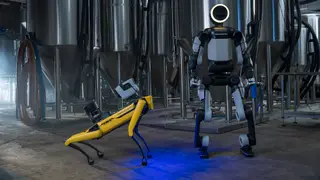
GlobalFoundries will conduct the first non-automotive trial of Boston Dynamics' Atlas humanoid robot in early 2027, marking a major expansion beyond its parent company Hyundai Motor Group's automotive applications. The testing will focus on semiconductor manufacturing tasks, building on GlobalFoundries' existing use of Spot robots for industrial inspections across its global facilities. The collaboration aims to assess integration needs, identify suitable applications, and prepare Atlas for real-world deployment in high-precision manufacturing environments.
In early 2027, GlobalFoundries will conduct the first non-automotive trial of Boston Dynamics’ Atlas humanoid robot, marking a pivotal expansion beyond its parent company Hyundai Motor Group’s automotive applications. The testing will take place across GlobalFoundries’ global manufacturing network, building on the company’s existing deployment of Spot robots since 2023—most notably at its Singapore facility, where two units have collectively traveled nearly 900 km and completed over 90,000 inspections with a 99% mission success rate. While specific tasks for Atlas remain undisclosed, the collaboration will focus on assessing integration needs, identifying suitable applications in semiconductor manufacturing, and training the robot for precision industrial work. Boston Dynamics confirmed that its initial production run for 2026 was fully committed to Hyundai and Google DeepMind, with additional customers like GlobalFoundries slated to begin trials in early 2027. The company has also opened its Robotics Metaplant Application Center (RMAC) near Savannah, Georgia, to train Atlas for automotive use, with plans to scale the facility tenfold by 2027. Meanwhile, Hyundai aims to deploy 25,000 Atlas units across its manufacturing operations and build a U.S. factory capable of producing 30,000 robots annually. What remains unknown includes the number of Atlas units involved, exact facilities hosting them, and the full scope of tasks they will perform.
The trial could signal a broader shift in how advanced robotics are deployed beyond traditional industrial sectors, potentially reshaping labor dynamics in high-precision manufacturing. If successful, GlobalFoundries’ use of Atlas may accelerate adoption across semiconductors, where automation demands extreme precision and reliability—challenges that could be met by AI-enhanced humanoids. This move may also influence other industries like aerospace, logistics, and life sciences, which Boston Dynamics has already indicated are in early discussions. The precedent of Spot’s successful integration into predictive maintenance at GlobalFoundries suggests a gradual, data-driven path to humanoid adoption, reducing risk through proven infrastructure. However, the societal impact remains uncertain: while automation may improve efficiency and safety, it could also displace skilled labor or increase workforce dependence on AI systems. Comparable to how early industrial robots transformed factory floors in the 1980s, this could be a foundational moment for physical AI in manufacturing—but outcomes depend on transparency, regulation, and equitable deployment. What to watch for includes whether other semiconductor firms follow suit, how Atlas’s new four-fingered hand improves task performance, and how Amazon veteran Rohit Prasad’s leadership shapes the robot’s AI integration strategy.