Euclid Space Telescope Releases First Major Data Set Featuring Nearly a Billion Cosmic Objects
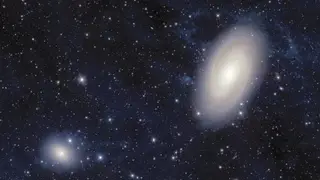
The European Space Agency's Euclid space telescope has released its initial major data collection, capturing nearly a billion celestial objects, including over 900 million galaxies and 60 million potential quasars. This dataset, the largest space-based survey of its kind, spans more than 1.7 million gigabytes and enables astronomers to construct the most detailed three-dimensional map of the universe to date. The observations leverage gravitational lensing, where massive objects bend light from distant sources, enhancing visibility and aiding in measuring cosmic mass distributions.
On November 12, 2026, the European Space Agency’s Euclid space telescope released its first major data set, DR1-Foundation, marking a pivotal moment in observational cosmology. This release includes observations of nearly a billion celestial objects—over 900 million galaxies and approximately 60 million potential quasars—collected across more than 1.7 million gigabytes of data. The survey covers a vast expanse of sky, enabling the construction of the most detailed three-dimensional map of the universe to date. Euclid’s high-resolution imaging, powered by a 600-megapixel visible-light camera launched in June 2023, captures light from distant galaxies and quasars, leveraging gravitational lensing—where massive foreground objects bend and magnify light from background sources—to enhance visibility and measure mass distributions. The mission has identified around 15,000 strong gravitational lensing candidates, a number described as “bonkers” by Ohio State University astronomer Scott Gaudi, who emphasizes the importance of such data for studying dark matter and dark energy. Euclid’s focus on wide-area optical surveys complements NASA’s Nancy Grace Roman Space Telescope, which operates in infrared and conducts repeated observations of smaller sky regions, creating a synergistic approach to probing cosmic structure.
The broader scientific context includes decades of planning and investment in space-based astronomy, with Euclid representing the culmination of efforts to map large-scale structures and understand dark energy’s role in accelerating cosmic expansion. Key institutions involved include ESA, the Euclid Consortium, and partner organizations across Europe and the U.S., all aiming to unlock mysteries of the early universe through statistical analysis of galaxy clustering and lensing effects. While the data release is a major milestone, many analyses remain pending—particularly detailed modeling of dark matter halos and precise calibration of redshift measurements for individual galaxies. The full implications of the dataset will emerge over the next several years as researchers across institutions collaborate to interpret the data.
The Euclid data release could significantly advance cosmological models by providing unprecedented statistical power to test theories about dark energy, dark matter, and the large-scale structure of the universe. Scientists may use the 3D map to refine predictions about cosmic inflation and galaxy formation, potentially challenging or confirming existing frameworks like Lambda-CDM. The public and academic communities benefit from open access to this data, fostering innovation in machine learning and automated classification tools for astronomy. Institutions with computational resources may lead new discoveries, while smaller observatories could leverage Euclid’s findings to guide future ground-based observations. A comparable precedent is the Sloan Digital Sky Survey, which transformed astrophysics by democratizing access to large-scale data; Euclid may have a similar long-term impact. However, the full societal effect remains uncertain—while breakthroughs in fundamental science rarely yield immediate economic returns, they often inspire technological spin-offs and STEM education initiatives. What to watch for includes collaborative publications, AI-driven data mining efforts, and potential policy shifts in space science funding as results emerge.