Astronomers Push to Unite Three Major Telescopes into an AI-Powered Virtual Observatory
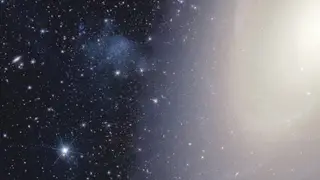
Astronomers are advocating for the creation of an AI-driven 'supertelescope' by merging data from three major observatories: the Vera C. Rubin Observatory in Chile, the Euclid space telescope, and the Nancy Grace Roman Space Telescope. The proposed virtual observatory would combine billions of sky observations to unlock deeper insights into the universe’s structure and evolution. With over $6 billion already invested in the individual projects, researchers argue that integrating their data through AI is essential to maximize scientific return.
In November 2026, astronomers led by Gioia Rau of Renaissance Philanthropy are calling for the integration of data from three major astronomical observatories—the Vera C. Rubin Observatory in Chile, the European Space Agency’s Euclid telescope, and NASA’s Nancy Grace Roman Space Telescope—into a unified, AI-powered virtual observatory. The Rubin Observatory began its 10-year survey in June 2026, scanning the southern sky every three days in visible light and capturing images of approximately 20 billion galaxies. Euclid, launched in 2023, maps a third of the sky in visible and near-infrared wavelengths over six years, while Roman, launched in August 2026, will conduct deeper surveys with a larger mirror but a smaller sky coverage (12%). Together, these projects represent over $6 billion in public investment. The proposed supertelescope would leverage AI and cloud computing to merge overlapping data, creating a single high-resolution image of the sky across multiple wavelengths. This integration is not new in concept—astronomers have combined data before—but the scale of the current effort is unprecedented, with petabytes of data generated daily. The goal is to enhance understanding of dark energy and dark matter by analyzing subtle distortions in galaxy distributions and transient events like supernovae. Key figures such as Meg Urry of Yale and Tony Tyson, Rubin’s chief scientist, support the initiative, calling it essential. However, no formal action has yet been taken by the governing bodies—the NSF and DOE for Rubin, ESA and NASA for Euclid and Roman—making the next steps uncertain.
The proposed AI-powered virtual observatory could transform how astronomers analyze cosmic data, potentially accelerating discoveries in cosmology and astrophysics. By combining data from three large-scale surveys, researchers may unlock insights into dark energy and dark matter more efficiently than with individual instruments. This could influence future mission planning, encouraging agencies to prioritize data interoperability from the outset. The success of such a project may also set a precedent for integrating data across other scientific domains, such as climate modeling or genomics, where AI and cloud computing are increasingly vital. A comparable earlier case is the Sloan Digital Sky Survey, which revolutionized astronomy by making its data publicly available and reusable, spawning countless follow-up studies. The current initiative could have a similar ripple effect, fostering collaboration across institutions and nations. However, challenges remain: coordination among international agencies, data standardization, and ensuring equitable access to the resulting insights. The next critical step—whether agencies will commit funding and policy support—remains unknown. If realized, this could mark a shift toward more integrated, AI-driven science, but its broader impact on research culture and public trust in science will depend on transparency and inclusivity in execution.