Intrinsic opens up core robotics software to accelerate developer innovation
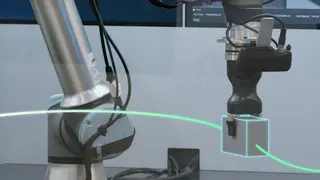
Intrinsic Innovation has released Intrinsic Core, an open-source, ROS-compatible software package that provides foundational building blocks for robotic applications. The company says the release aims to reduce the hundreds of hours developers typically spend coding robotic capabilities from scratch. Intrinsic also introduced an open reference design for CNC machine tending, and the software is available under an Apache 2.0 license on GitHub.
Intrinsic Core's release at ROSCon 2026 in Toronto marks a significant shift for the Alphabet-owned company, which has positioned the software as the foundation of its own commercial stack rather than a side project. The package centers on Intrinsic Control, a hardware-agnostic real-time framework that lets robots adjust behavior mid-trajectory and swap components like arms, grippers, and sensors without rewriting drivers. Additional modules include pose estimation built on NVIDIA's FoundationPose, automated motion planning that replaces manual joint-by-joint programming, and adaptive grasp planning for varied gripper types. The company also introduced the Open Machine Tending Solution, an open reference design for CNC machine tending, alongside the GitHub release under a permissive Apache 2.0 license. Executives from both Intrinsic and the Open Source Robotics Foundation framed the move as a durable commitment to filling gaps in the existing ROS ecosystem.
This open-sourcing could meaningfully lower the barrier to entry for smaller robotics firms and academic labs that lack resources to build foundational infrastructure from scratch. By making core capabilities freely available, Intrinsic may accelerate experimentation across manufacturing, logistics, and research settings, potentially speeding adoption of adaptive, sensor-driven automation. The move could also reshape competitive dynamics, as rivals may need to differentiate on higher-level applications rather than basic control frameworks. Workers in industries adopting these tools may see faster deployment of robotic systems, though the broader societal effect depends on how widely the technology spreads and how organizations choose to implement it.