Astronomers Witness Rare Stellar Merger as Giant Star Engulfs Companion
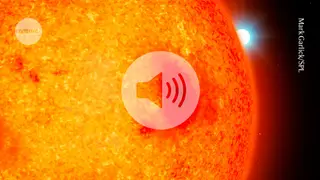
Scientists have directly observed a giant star consuming its nearby companion, offering unprecedented insights into stellar merger dynamics. The event, captured through advanced observational techniques, reveals how such interactions influence the evolution of star systems. The findings are supported by theoretical models and contribute to understanding the complex processes within common-envelope stellar systems.
On 18 November 2026, astronomers reported the first direct observation of a giant star engulfing its stellar companion, a rare event captured through advanced observational techniques. The system, identified as an intra-stellar merger within a common-envelope configuration, marks a pivotal moment in astrophysics by providing real-time data on a process previously only theorized. The event was detected using instruments capable of tracking subtle changes in luminosity and spectral signatures, allowing scientists to infer the dynamics of the star’s collapse into its neighbor. The research, led by Karambelkar et al. and published in Nature, confirms long-standing models of stellar evolution where binary systems undergo violent interactions due to gravitational instability. These findings help clarify how such mergers influence the formation of exotic stellar objects, including certain types of white dwarfs and neutron stars. The study is supported by theoretical simulations and adds empirical weight to the understanding of common-envelope phases, which are critical in shaping the late-stage evolution of binary systems.
The work builds on decades of indirect evidence from stellar populations and binary star surveys, but this is the first time such an event has been observed in real time. The team, including researchers from institutions referenced in the Nature Podcast and affiliated with the study, aims to refine models of stellar dynamics and improve predictions for gravitational wave sources. The broader scientific community, particularly in astronomy and space physics, sees this as a breakthrough in validating long-standing hypotheses. However, the exact timing and frequency of such mergers remain uncertain, and the long-term fate of the merged system—whether it becomes a single massive star or collapses into a compact remnant—remains unresolved. Future observations using next-generation telescopes may help track similar events, but the rarity of such phenomena means that each detection is a significant milestone.
This observation could reshape how astronomers model binary star evolution and predict the origins of gravitational wave events, particularly those involving compact objects. By confirming the dynamics of common-envelope mergers, the findings may improve the accuracy of simulations used in gravitational wave astronomy, potentially enhancing detection capabilities for observatories like LIGO and Virgo. The broader impact extends to public understanding of stellar phenomena, as such discoveries often capture widespread interest and inspire science education initiatives. Comparable to the 2015 detection of gravitational waves, which validated Einstein’s predictions and launched a new era in observational physics, this event may serve as a foundational moment for multi-messenger astrophysics. However, unlike the widespread technological spin-offs from gravitational wave research, this discovery is unlikely to yield immediate commercial applications. What to watch for next is whether similar events are detected more frequently with improved instrumentation, and how these observations will refine our understanding of stellar population models and the lifecycle of stars in binary systems.