New CUDA-X Libraries Boost AI-Driven Scientific Research Across Fields
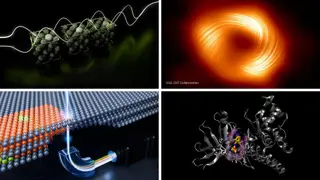
NVIDIA has expanded its CUDA-X libraries with new tools like cuPhoton, cuPotential, and cuSpa, enabling faster analysis of massive datasets in fields such as astrophysics, materials science, and single-cell biology. The cuPhoton.xBeam module now processes black hole data from the Event Horizon Telescope in minutes instead of months, allowing real-time imaging of cosmic phenomena. These advancements empower AI agents to assist researchers in exploring complex systems more efficiently.
In November 2026, NVIDIA unveiled new additions to its CUDA-X software suite—cuPhoton, cuPotential, and cuSpa—designed to accelerate scientific computing across disciplines like astrophysics, materials science, and biomedicine. The most notable advancement is the cuPhoton.xBeam module, which reduced the processing time for Event Horizon Telescope data from over a month to just eight minutes, enabling real-time imaging of black hole phenomena such as Messier 87* and jets from J1924 and 3C279. This leap was achieved by leveraging distributed multi-GPU systems and the NVIDIA DGX Spark platform, allowing researchers to correlate global radio telescope data at unprecedented speed. In fusion research, the cuPhoton.xLens module enables real-time visualization of plasma simulations, allowing scientists at Pacific Fusion to interactively guide experiments using an AI agent powered by Nemotron. Meanwhile, cuPotential—developed in collaboration with the Simons Foundation’s Flatiron Institute and D. E. Shaw Research—accelerates molecular dynamics simulations up to threefold while enhancing accuracy, aiding drug discovery efforts by companies like Schrödinger and Fathom Therapeutics. In materials science, Daviator boosts quantum-mechanical calculations for the Vienna Ab initio Simulation Package by up to 22x, while DAQIRI enables real-time electron microscopy analysis at Lawrence Berkeley Lab. The open-source cuSpa tool delivers a 900x speedup in spatial graph generation for single-cell biology, adopted by Memorial Sloan Kettering and integrated into 10x Genomics’ Sentira platform. These tools collectively represent a strategic expansion of NVIDIA’s AI infrastructure to support scientific discovery at scale.
These CUDA-X advancements could significantly accelerate breakthroughs in fields where data complexity and computational cost have historically limited progress. By enabling real-time analysis in astrophysics and fusion, researchers may shift from post-experiment review to dynamic, adaptive experimentation—potentially shortening the timeline for achieving controlled nuclear fusion or understanding cosmic phenomena. In biomedicine, faster spatial transcriptomics and protein annotation may democratize access to high-resolution biological data, empowering smaller labs and startups like Therna Biosciences and Basecamp Research to compete with larger institutions. The integration of AI agents into these workflows suggests a broader trend toward autonomous scientific discovery, where machines assist in hypothesis generation and experimental steering—reminiscent of how early computational tools transformed physics simulations in the 1980s. However, widespread adoption depends on software compatibility, training, and equitable access to high-end GPU infrastructure, which remains a barrier for many academic and public-sector researchers. The long-term impact may include new models of collaborative science, where AI-driven insights emerge during experiments rather than after, reshaping how research is planned, funded, and validated.