Percepto Unveils Axion AI Platform to Centralize and Analyze Inspection Data Across Industries
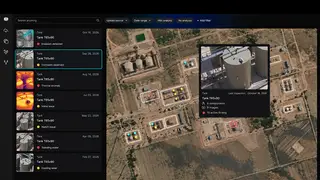
Percepto has introduced Axion, a hardware-agnostic physical AI platform that enables operators to analyze inspection data from any third-party drone or sensor network. The platform supports mission-critical infrastructure sectors like oil and gas, power transmission, and industrial processing by enabling autonomous monitoring and predictive maintenance. This marks a strategic shift from hardware-focused operations to a software-first model, expanding access to Percepto’s AI-driven inspection capabilities.
Percepto unveiled Axion, a hardware-agnostic physical AI platform, on October 30, 2026, marking a strategic pivot from its earlier focus on proprietary drone hardware to a software-first model. Based in Modi’in, Israel, with U.S. operations in Austin, Texas, the company launched Axion as a cloud-based SaaS solution designed to unify inspection data from any third-party drone or sensor network. The platform supports over 160 AI models and integrates data from fixed and mobile sensors, existing archives, and diverse drone platforms, enabling operators in oil and gas, power transmission, and industrial processing to conduct autonomous monitoring and predictive maintenance. Axion allows users to analyze historical data immediately and apply AI-driven insights without replacing current hardware investments. This shift follows leadership changes: Julien Bellanger succeeded longtime CEO Dor Abuhasira, bringing new revenue and marketing leadership, signaling a broader corporate evolution toward scalable software solutions. Percepto will continue manufacturing its drones in the U.S., aligning with the American Drone Dominance Initiative. The company emphasizes that Axion extends the value of existing inspection workflows by enabling plain-language queries via an integrated large language model (LLM), allowing teams to extract actionable intelligence from vast data sets. What remains unclear is how widely Axion will be adopted beyond early adopters and whether its AI models will achieve consistent accuracy across diverse industrial environments.
Axion could significantly reshape how critical infrastructure operators manage risk and operational efficiency by democratizing access to advanced inspection analytics. By decoupling AI insights from specific hardware, Percepto may accelerate digital transformation in traditionally conservative sectors like energy and utilities, where legacy systems dominate. This shift mirrors earlier industry transitions, such as the adoption of cloud-based ERP systems in manufacturing during the 2010s—where software platforms gradually replaced isolated, on-premise tools. The broader impact may include reduced downtime, lower maintenance costs, and improved safety by enabling early detection of failures. However, challenges remain: data privacy concerns, integration complexity with legacy systems, and the reliability of AI interpretations in high-stakes environments could limit adoption. The role of human oversight and expert validation, emphasized in Percepto’s messaging, suggests a hybrid model may be necessary. What to watch for includes whether Axion gains traction beyond pilot programs, how competitors respond with similar platforms, and whether regulatory bodies begin establishing standards for AI-driven inspection in critical infrastructure—particularly as autonomous systems become more embedded in industrial operations.