Skydio Unveils Asymmetrical F10 Lightrunner for High-Speed Autonomous Flight
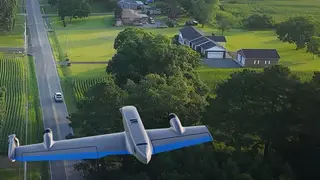
Skydio has introduced the F10 Lightrunner, an asymmetrical fixed-wing drone designed for autonomous deployment and high-speed flight. The drone is tailored for applications in public safety and infrastructure inspection, leveraging advanced autonomy to operate efficiently without constant human oversight. Its unique lopsided design enhances aerodynamic performance for long-range missions.
Skydio has launched the F10 Lightrunner, a fixed-wing drone featuring an asymmetrical design intended to optimize high-speed autonomous flight. The drone is engineered for long-range missions in demanding environments, specifically targeting public safety operations and infrastructure inspection. Its unique lopsided aerodynamic profile enhances performance during sustained flight, enabling efficient operation over extended distances without requiring constant human intervention. While specific speed figures, range metrics, or deployment dates are not provided, the emphasis on autonomy suggests a shift toward reduced operator dependency in critical missions. The F10 Lightrunner represents a strategic evolution in Skydio’s product line, building upon its reputation for AI-driven drone systems.
The development follows growing demand for autonomous aerial platforms capable of operating in complex or hazardous conditions where human pilots face limitations. Prior advancements in drone autonomy—such as Skydio’s earlier consumer and enterprise models—have laid the groundwork for this new focus on fixed-wing design and extended mission endurance. The company’s push into specialized applications like infrastructure inspection reflects broader industry trends toward integrating robotics into public safety and industrial maintenance workflows. Skydio, as a key player in autonomous drone technology, aims to expand its market presence beyond consumer and military sectors into commercial infrastructure and emergency response domains.
What remains unclear is the timeline for commercial availability, regulatory approvals required for high-speed flight in shared airspace, or how the asymmetrical design compares to conventional fixed-wing drones in terms of stability and payload capacity. The next steps likely involve field testing with public safety agencies and utility companies, though no official partnerships or pilot programs have been announced.
The F10 Lightrunner could significantly influence how emergency services and infrastructure operators conduct surveillance and maintenance. By enabling autonomous, long-range flights, it may reduce response times during disasters and lower operational costs for routine inspections of power lines, pipelines, or bridges. This shift may also affect employment patterns in these sectors, potentially reducing the need for manned aerial surveys while increasing demand for drone operators trained in AI-assisted systems. Comparable to how early UAVs transformed military reconnaissance in the 2000s, Skydio’s new drone may signal a broader transition toward autonomous systems in civilian infrastructure. However, unlike military drones, this technology operates in densely populated or regulated airspace, raising questions about safety protocols and public acceptance. The asymmetrical design is an unusual engineering choice—its real-world performance and regulatory compliance remain unverified. What to watch for includes how quickly the drone integrates into real-world operations, whether similar designs emerge from competitors, and how regulators adapt to high-speed autonomous flight. The outcome may shape future standards for urban air mobility and remote sensing infrastructure.