Axon stakes $1.2B in Skydio to expand autonomous drone access for emergency services
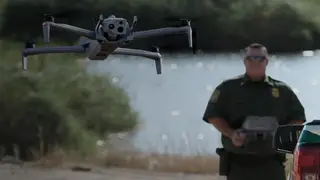
Axon has invested $1.2 billion in Skydio, acquiring a 20% stake and becoming the exclusive U.S. and Canadian distributor for Skydio’s drones in public safety applications. The partnership aims to accelerate deployment of autonomous drones through Axon’s Drone as First Responder program, which has already reduced response times by up to 65% in pilot agencies. Skydio’s AI-powered drones are designed to operate safely in complex environments, providing critical early visibility during emergencies.
In November 2026, Axon Enterprise Inc. announced a $1.2 billion investment in Skydio Inc., acquiring a 20% stake in the San Mateo-based drone manufacturer, which is now valued at $5.2 billion. As part of the deal, Axon will become the exclusive distributor of Skydio’s drones for public safety applications across the United States and Canada. The partnership centers on expanding Axon’s Drone as First Responder (DFR) program, which has already demonstrated a reduction in emergency response times by up to 65% in pilot agencies. Skydio’s AI-powered drones, equipped with modular sensor packages including high-resolution visual and radiometric cameras, are designed to operate autonomously in complex urban and disaster environments. The investment includes both cash and Axon stock, with the transaction expected to close in the fourth quarter of 2026 and first quarter of 2027, pending regulatory approvals. Skydio currently serves over 1,500 public safety customers, and more than 28 million Americans live within two miles of a DFR deployment site. The companies cited a $13 billion total addressable market for DFR in North America, with Skydio projecting around $1 billion in bookings for its current fiscal year.
The move follows years of growing interest in autonomous aerial systems for emergency response, with Axon having previously developed and tested DFR technology through pilot programs. Skydio’s CEO Adam Bry emphasized the strategic alignment, noting that Axon’s distribution reach will accelerate deployment, while Axon’s leadership in public safety tech allows Skydio to focus on innovation. Both companies aim to scale autonomous drone capabilities across critical sectors. However, key details remain unresolved: the exact timeline for full integration, how regulatory hurdles may affect rollout, and whether other markets beyond North America will be included. It is also not yet known how this partnership might influence competition with other drone providers like Zipline, which recently raised $1.5 billion for delivery infrastructure.
This investment signals a major institutional shift toward integrating autonomous drones into public safety infrastructure, potentially transforming emergency response across urban and rural areas. By enabling drones to arrive before human responders—on 80% of calls in pilot programs—this technology could significantly improve outcomes in medical emergencies, missing persons cases, and high-risk incidents, reducing the risk to first responders. The broader societal impact may include increased public trust in automated systems, especially if deployments consistently demonstrate life-saving results. However, concerns around privacy, airspace congestion, and algorithmic bias in AI-driven decision-making remain unresolved and could affect long-term acceptance. A comparable precedent is the adoption of body-worn cameras by law enforcement in the 2010s, which initially faced skepticism but eventually became standard due to demonstrated accountability benefits. Similarly, DFR systems may gain traction through measurable improvements in response speed and situational awareness. The partnership could also influence adjacent markets, such as insurance (via reduced incident severity) and urban planning (through real-time data collection). What to watch for next is how quickly other jurisdictions adopt similar models, whether federal policies emerge to standardize drone use in emergencies, and how public perception evolves as these systems become more embedded in daily life.