Opera Unveils WebAI: On-Device AI Integration in Next-Gen Browsers
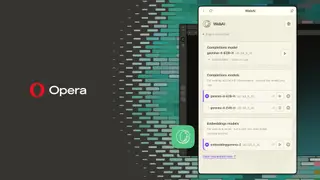
Opera has launched WebAI, enabling local AI model execution directly within its browsers, with initial access available in Opera One as an opt-in preview. The technology, backed by Google and Microsoft, allows users to run AI models like Google’s Gemma and Apple’s on-device foundation model without sending data to remote servers. It supports text generation, content classification, and information relationship analysis, all while maintaining user control over model usage and data privacy.
Opera’s WebAI marks a shift toward decentralized AI by enabling on-device execution of open models like Google’s Gemma and Apple’s on-device foundation model, eliminating reliance on cloud-based AI services. The technology, initially available in Opera One as an opt-in preview, leverages existing consumer hardware capabilities, with local models requiring 2–10 GB of storage and operating without API keys or subscriptions. Developers can integrate AI features via standardized APIs—Prompt, Decision, Semantic Embeddings, and others—without managing infrastructure, allowing for privacy-preserving tools like content classifiers or job post detectors.
WebAI could empower users with greater control over personal data by keeping AI processing local, potentially reshaping expectations around digital privacy in web interactions. As more browsers adopt similar models, consumers may increasingly demand on-device AI features, influencing how tech companies design services. Developers may benefit from reduced costs and infrastructure needs, but widespread adoption hinges on performance, model availability, and user trust in local AI capabilities.