SafeWorld launches with $12.2M to advance robot safety testing through simulation
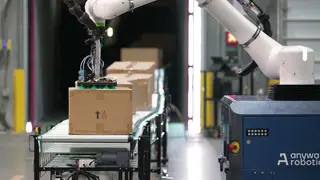
SafeWorld has announced its emergence from stealth mode with $12.2 million in seed funding to develop simulation and testing platforms for AI-powered robots. The Oakland-based startup addresses the challenge of validating robot behavior in rare, dangerous, and unpredictable scenarios without physical risk, particularly as robots increasingly operate alongside humans outside controlled industrial cages. The platform supports various robot types including arms, humanoids, and mobile robots across industries such as manufacturing, logistics, construction, and home applications.
SafeWorld's emergence addresses a fundamental shift in robotics deployment. Traditional industrial robots operated in isolated environments with predetermined tasks and strict safety cages. The integration of AI has fundamentally altered this landscape, enabling robots to operate autonomously in shared human spaces—manufacturing floors, construction sites, and homes—where unpredictable interactions occur constantly. This transition creates novel safety challenges that historical datasets and conventional testing cannot adequately address, since many dangerous scenarios remain statistically rare but potentially catastrophic.
The company's approach emphasizes continuous validation rather than single pre-deployment testing phases. By leveraging simulation with reactive human modeling, SafeWorld enables developers to generate thousands of scenario variations without physical risk. This methodology acknowledges that each software update and environmental change introduces new failure modes, necessitating iterative safety validation throughout a robot's operational lifecycle, particularly important as AI systems adapt to novel situations.
SafeWorld's platform could significantly influence how robustly AI-powered robots are validated before widespread deployment. If effective, such simulation-based safety testing may reduce workplace injuries and incidents when robots collaborate with humans. However, the impact may depend on whether robotics companies uniformly adopt comprehensive testing practices and whether simulation-derived safety evidence proves predictive of real-world performance. The approach could also affect regulatory frameworks, potentially establishing new industry standards for AI robot certification and deployment approval.