Manufacturing Leader Jabil Details Transition of Humanoids from Prototypes to Commercial Production
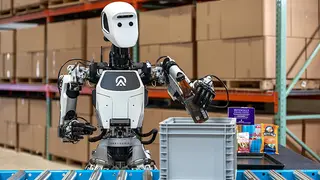
Jabil, a major design and manufacturing services provider, shared insights on scaling humanoid robot production from limited prototypes to tens of thousands of units annually. The company works with developers like Apptronik to reduce costs and improve manufacturability while addressing challenges in compute capacity and supply chain infrastructure. Automotive companies including Tesla, Hyundai, and BMW are contributing design-for-manufacturing expertise that accelerates the shift toward viable commercial deployment.
Jabil's role centers on bridging the gap between robotics startups and viable commercial production. The company addresses a critical bottleneck: moving from handcrafted prototypes costing hundreds of thousands of dollars to standardized manufacturing processes capable of producing tens of thousands annually. This requires fundamental redesigns focused on cost reduction, component standardization, and quality control—expertise traditionally concentrated in automotive and consumer electronics sectors rather than robotics development.
The infrastructure challenges extend beyond individual robot design to encompass supply chain resilience and compute availability. Edge computing hardware remains expensive at scale, while wiring harnesses and power systems must simultaneously meet automotive durability standards and consumer electronics miniaturization requirements. Industry partnerships among Tesla, Hyundai, BMW, and specialized robotics firms signal recognition that humanoid commercialization depends less on algorithmic breakthroughs than on unglamorous manufacturing competence.
Humanoid robot commercialization could reshape labor economics in manufacturing, warehouse logistics, and repetitive service sectors by enabling task-flexible automation where fixed-purpose machinery currently dominates. Workers may face displacement or require retraining, while businesses could gain operational flexibility and reduced labor costs. The pace of actual deployment—rather than funding announcements—determines real economic impact. Supply chain concentration and compute hardware bottlenecks may limit adoption speed more than robotics capabilities themselves, potentially creating uneven sector-by-sector transformation rather than sudden workforce disruption.