OpenAI Deploys GPT-6 Astra Ultrafast on Blackwell GPUs, Achieving 8x Token Generation Speed
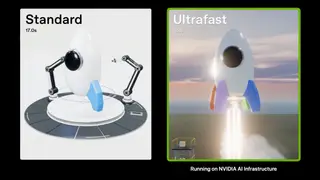
OpenAI has launched GPT-6 Astra Ultrafast, a model running on NVIDIA's Blackwell GPUs that delivers up to 8 times faster token generation compared to standard mode through optimized inference techniques. The acceleration particularly benefits code generation and interactive applications by reducing latency in tool use workflows. OpenAI continues to refine performance through its own models, leveraging NVIDIA's platform programmability to implement ongoing inference improvements.
The optimization leverages NVIDIA's Blackwell architecture's programmability to enable OpenAI's engineering teams to write custom inference kernels that dramatically reduce latency. This capability proves especially valuable in multi-step workflows where AI agents must repeatedly generate code, execute tools, evaluate results, and determine subsequent actions—scenarios where even small latency improvements compound across numerous iterations.
OpenAI's approach treats model deployment as an iterative process rather than a static endpoint. By continuously refining inference software post-launch, the company can extract additional performance gains from existing hardware infrastructure without requiring model retraining. This methodology improves resource utilization efficiency and allows deployed systems to become progressively faster over time.
This advancement could reshape development practices by making AI-assisted coding workflows more fluid and responsive, potentially accelerating software development cycles across enterprises. Faster inference may enable broader adoption of agentic AI systems in time-sensitive applications. However, the technology's benefits appear concentrated among organizations with API access and sufficient computational budgets, raising questions about whether performance gains will equitably distribute across different developer communities or reinforce existing market advantages for well-resourced firms.