Sensing Solutions Drive Humanoid Robot Performance in Real-World Deployments
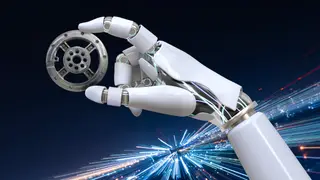
Vishay Precision Group will present force and torque sensing technologies designed for humanoid robots entering industrial and domestic environments. The company emphasizes that precise real-time physical feedback through custom-built sensors is essential for humanoid robots to safely interact with unpredictable surroundings and handle complex tasks. Standard off-the-shelf sensors prove inadequate for humanoid applications, prompting demand for integrated, multi-axis solutions optimized for compact robot limbs and thermal stability.
Humanoid robots operating in uncontrolled environments face fundamentally different engineering constraints than traditional industrial automation. Unlike stationary factory equipment working within predictable parameters, these mobile systems must continuously adjust to variable conditions, shifting loads, and dynamic interactions with people and objects. This requires sensing architecture integrated at the design phase rather than bolted on afterward.
The gap between prototyping and production-ready deployment centers on sensor limitations. Generic commercial sensors often prove oversized for delicate robotic appendages, feature excessive measurement ranges that degrade precision, and lack the environmental hardening needed for thermal fluctuations and vibration found in compact joints. Custom strain-gauge solutions built into structural components overcome these constraints by providing localized, multi-directional feedback critical for real-time motor control and safety.
Advanced sensing in humanoid robots could significantly impact workplace safety and task capability across manufacturing, logistics, and service sectors. Enhanced tactile feedback may enable robots to work more effectively alongside human workers by improving their ability to detect and respond to unexpected contact. However, widespread adoption depends on whether custom sensing solutions can achieve cost-effective scaling and whether industries perceive performance gains as worth integration complexity. The social implications—job displacement versus labor augmentation—remain dependent on deployment choices rather than technology alone.