Maven Robotics Secures $100M to Scale Production of Mobile Manipulators for Factory Automation
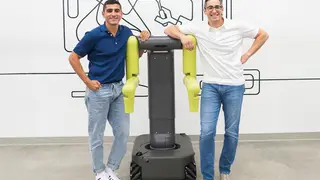
Maven Robotics has raised $100 million in Series A funding to mass-produce its mobile manipulator robots designed specifically for industrial labor automation. The company's robots currently operate at up to 99% uptime across production contracts, addressing a critical shortage of over half a million unfilled manufacturing jobs in the U.S. Unlike humanoid robotics competitors, Maven's approach prioritizes solving specific factory floor tasks over achieving a human-like form factor.
Maven Robotics distinguishes itself through a pragmatic methodology that begins with factory floor requirements rather than predetermined robot designs. The company's mobile manipulators feature compact wheeled bases that navigate tight industrial spaces while extending reach up to three meters and handling 30-kilogram payloads. The founder team brings experience from previous hard-technology ventures, informing their engineering approach to reliability and real-world deployment challenges.
The company's network architecture enables distributed learning across its robot fleet globally, allowing systems in different facilities to share performance data and error corrections. Maven's initial focus on specific, high-volume tasks—mixed-case palletizing and tote handling—provides a foundation for expanding capabilities. The organization prioritizes deep collaboration with manufacturing partners during development, embedding engineers in actual work environments rather than conducting isolated lab testing.
Maven's approach could help address significant labor market pressures in manufacturing, potentially making production roles more accessible while augmenting existing workforce capacity. The focus on task-specific automation rather than general humanoid design may accelerate deployment timelines and reduce implementation costs for factories. However, widespread adoption could reshape manufacturing employment patterns and may create transitional challenges for workers in affected roles, warranting consideration of workforce adaptation and skills retraining alongside technological deployment.