Food Robotics 2.0: B2B Automation Drives New Wave of Efficiency in Food Industry
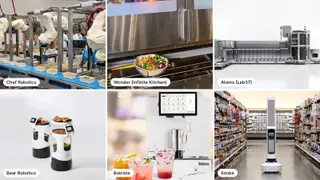
The food robotics sector is shifting from consumer-facing robot restaurants to business-to-business solutions that enhance productivity and reduce labor costs across manufacturing, kitchens, and retail environments. Companies like Chef Robotics, Wonder, ATOMS, and Simbe are leading this transformation by providing automation tools tailored for established food brands rather than competing in the consumer market. With significant funding from investors including Andreessen Horowitz and founders like Travis Kalanick and Marc Lore, the industry is achieving measurable returns on investment.
The food robotics sector is undergoing a strategic pivot from consumer-facing ventures to B2B automation solutions, marking what industry observers are calling Food Robotics 2.0. This shift is exemplified by companies like Chef Robotics, Wonder, ATOMS, and Simbe, which now focus on deploying robots in manufacturing lines, delivery kitchens, and retail environments rather than operating restaurants themselves. Chef Robotics has already completed over 145 million servings across North America and Europe, demonstrating scalability in high-mix meal assembly where variability in ingredients and frequent recipe changes challenge traditional automation. ATOMS, backed by Uber co-founder Travis Kalanick and Andreessen Horowitz, raised $1.7 billion, while Wonder, founded by Marc Lore—known for his success with Jet.com and Quidsi—secured $3 billion. These investments signal confidence in the model of supporting existing food brands rather than competing with them. The prior wave of food robotics (Food Robotics 1.0) struggled because startups had to master both culinary innovation and robotics, leading to high failure rates. Now, by focusing on operational efficiency—reducing labor turnover exceeding 150% in manufacturing, streamlining beverage prep, and enabling scalable kitchen workflows—the new wave addresses persistent industry pain points with measurable ROI. The deployment of BotristaPro systems across more than 6,000 U.S. locations, including at Texas A&M University and Jollibee’s sips menu, underscores the growing acceptance of automation in routine tasks. What remains unresolved is whether these systems can maintain reliability at scale beyond pilot programs and how labor dynamics will shift as robots take over repetitive work.
The rise of B2B food robotics could significantly reshape labor markets in food service and manufacturing, particularly in roles involving repetitive physical tasks. While automation may reduce the burden on workers in high-turnover environments, it also raises questions about job displacement and the need for reskilling. The impact may be most pronounced in ghost kitchens, central commissaries, and college dining halls—settings where staffing challenges are acute. A comparable precedent is the adoption of automated checkout systems in retail, which initially faced consumer resistance but eventually became normalized due to efficiency gains. In this case, the shift from B2C to B2B models may reduce public skepticism, as robots serve behind the scenes rather than interact directly with customers. However, long-term success depends on whether these systems can adapt to unpredictable variables in food preparation without requiring constant human oversight. The involvement of high-profile investors and founders suggests strong financial backing, but widespread adoption will hinge on proving consistent cost savings and reliability across diverse operations. What to watch for next is how quickly the technology scales beyond early adopters into mid-sized chains and whether regulatory or labor frameworks evolve in response to automation’s growing footprint.