White House Tech Summit Produces No Consensus on AI Regulation Strategy
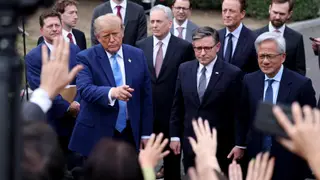
Following a White House lunch between President Trump and major AI industry executives, companies remain committed to self-regulation rather than external oversight, with minimal progress on safety standards. The gathering revealed conflicting positions within the sector, as some leaders had previously advocated for regulatory frameworks while others now favor industry self-governance with limited external evaluation. The meeting left fundamental questions about AI safety governance unresolved despite the high-profile convening of tech leaders.
The White House gathering brought together executives from major AI firms including Alphabet, Meta, OpenAI, and Anthropic to address mounting safety concerns that had dominated industry discussions for weeks. The resulting accord emphasized corporate responsibility for safe technology development, yet notably came from some of the same leaders who had recently called for formal government oversight structures. Industry observers highlighted the apparent contradiction, noting that calls for self-regulation may reflect companies' preference for unified standards that prevent competitive disadvantages rather than genuine confidence in voluntary compliance mechanisms.
The outcome could affect how AI safety standards develop across the industry, potentially leaving gaps if self-regulation proves insufficient for emerging risks. Investors and policymakers may face uncertainty about the adequacy of current oversight mechanisms, while companies could benefit from avoiding stricter external requirements. Consumers and affected communities may experience different levels of protection depending on individual corporate commitments rather than consistent regulatory baselines. The unresolved tensions between industry preferences and expert safety recommendations suggest ongoing pressure for future policy discussions.