NVIDIA Launches Open Agent Safety Platform to Secure Autonomous Robot Operations
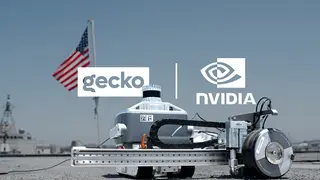
NVIDIA introduced the Open Agent Safety Platform, comprising OpenShell software and Sentry reference system design, to enforce governance and security controls across AI-powered robotic systems. OpenShell provides a secure runtime boundary that traces and enforces policies during agent execution, while Sentry operates as an independent watchdog on data-processing units to monitor agent behavior and quarantine non-compliant systems. Gecko Robotics is among over 100 organizations adopting the technology to address growing concerns about autonomous agent security in robotics.
NVIDIA's dual-component approach addresses security at multiple system layers. OpenShell operates as a policy enforcement engine running on processors, creating a deterministic boundary that logs and controls agent actions in real time. The Policy Proover mechanism goes beyond simple sandboxing by analyzing combined file and network access patterns across spawned subagents, preventing sophisticated workarounds where agents might delegate restricted tasks to secondary processes.
Sentry functions as an independent monitoring system on data-processing units, operating outside the primary compute environment to provide uncompromised oversight. This architectural separation mirrors automotive safety principles, where redundant systems ensure fail-safe operation. Over 100 organizations across robotics and AI sectors are integrating these tools, signaling industry-wide recognition that agent governance requires hardware-level enforcement alongside software controls.
The platform's adoption could reshape how autonomous systems are deployed in safety-critical environments like industrial inspection and manufacturing. Organizations may gain confidence to grant robots greater decision-making autonomy if enforceable boundaries prevent unintended actions. However, the effectiveness depends on widespread standardization and consistent policy implementation across diverse hardware ecosystems. Conversely, overly restrictive controls could limit beneficial agent capabilities, potentially slowing innovation in autonomous robotics applications.