ETH Zurich Creates Self-Contained Robotic Hand That Walks and Manipulates Objects
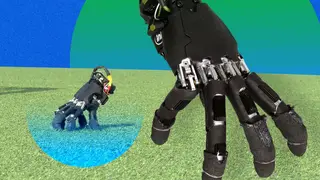
Researchers at ETH Zurich have developed a fully autonomous robotic hand that can locomote by walking on its fingertips while simultaneously using those same digits to interact with and manipulate objects in its environment. The system repurposes a commercial robotic hand as a complete standalone robot, eliminating the need for a traditional body or arm structure. This approach could enable new applications where the robot accesses confined spaces and operates controls that would be difficult for conventional robots to reach.
Researchers at ETH Zurich have engineered a novel robotic system by repurposing commercially available hand technology into an independent mobile unit. Rather than requiring a separate body structure, the device achieves locomotion through coordinated fingertip contact with surfaces, allowing it to traverse environments while retaining full manipulation capabilities. This design philosophy challenges conventional robotics architecture, which typically separates locomotion systems from manipulation appendages.
The dual-functionality approach opens possibilities for deployment in constrained environments where traditional robotic platforms cannot physically fit. By leveraging the same articulated digits for both movement and object interaction, the system reduces hardware complexity while expanding the range of tasks a single unit can perform in tight quarters or around delicate controls.
This development could influence how industries approach inspection, maintenance, and assembly tasks in space-constrained settings such as machinery interiors, aircraft fuselages, or disaster sites. If the technology proves reliable and scalable, it may reshape expectations about robotic form factors and efficiency. However, practical limitations around speed, load capacity, and real-world environmental adaptation remain open questions that could affect adoption across different sectors and applications.