Acidic compounds in human sweat activate mosquito ion channels to guide blood-seeking behavior
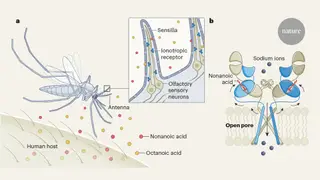
Researchers have revealed how acidic molecules in human sweat trigger ionotropic receptors in malaria-carrying mosquitoes, specifically Anopheles stephensi, leading to the opening of ion channels and generating electrical signals that guide the insects toward hosts. The study, published in Nature, presents 3D structures of the receptor complex bound to acidic compounds, offering insights into the molecular mechanism of host detection. This discovery could inform new strategies to disrupt mosquito attraction and reduce malaria transmission.
In November 2026, researchers led by Xu et al. published in Nature detailed 3D structures of an ionotropic receptor complex from the malaria-carrying mosquito Anopheles stephensi, revealing how acidic compounds in human sweat—such as lactic acid and other short-chain carboxylic acids—activate specific ion channels. The study demonstrated that these acidic ligands bind to the receptor’s extracellular domain, triggering a conformational change that opens the ion-conducting pore, thereby generating electrical signals that guide the mosquito toward a human host. The findings, derived from cryo-electron microscopy and structural biology techniques, offer the first high-resolution view of how such receptors function at the molecular level. The work builds on prior research identifying ionotropic receptors (IRs) as key players in mosquito host-seeking behavior, including earlier studies by Benton et al. (2009) and Raji et al. (2019), which established IRs as critical for detecting volatile and non-volatile host cues. The CSIR–Centre for Cellular and Molecular Biology in Hyderabad, India, and the Academy of Scientific and Innovative Research were central to the research, with authors Swathi Pantheerayil and Janesh Kumar contributing to the structural and functional analysis. The ultimate goal of this research is to inform the development of novel repellents or attractants that disrupt this sensory pathway, potentially reducing malaria transmission. However, it remains unclear whether similar mechanisms operate in other Anopheles species or if such interventions would be effective in real-world settings without unintended ecological consequences.
This discovery could influence vector control strategies by enabling the design of targeted, biologically inspired repellents that interfere with mosquito host detection at the molecular level. If developed into practical products, such interventions may reduce reliance on broad-spectrum insecticides, potentially lowering environmental and health risks. The approach may also inspire new public health campaigns focused on disrupting mosquito sensory systems, particularly in high-burden regions like sub-Saharan Africa. A comparable precedent is the development of DEET and picaridin, which, while effective, act through unknown mechanisms and can cause skin irritation or environmental persistence. Unlike those, this research offers a precision-targeted strategy grounded in structural biology. However, the path from molecular insight to field application remains uncertain—no such compound has yet been tested in humans or in endemic areas. The success of this work may depend on partnerships between academic institutions, pharmaceutical developers, and global health agencies like the WHO. What to watch for next is whether this mechanism is conserved across other disease-carrying mosquito species, and whether synthetic analogs of the receptor’s ligand-binding site can be engineered as decoy attractants or blockers.