Experts Warn Ebola Outbreak in Central Africa Requires More Than Medical Interventions
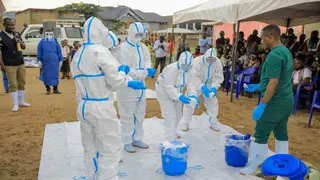
The ongoing Ebola outbreak in the Democratic Republic of the Congo, caused by the rare Bundibugyo virus, has spread to five countries with over 11,600 cases and more than 5,600 deaths as of November 17, 2026. Marie-Roseline Bélizaire, WHO’s emergency director for Africa, emphasizes that while vaccine trials are underway, the crisis demands broader public health strategies beyond medicine. The outbreak is the second-largest in history and the fastest-spreading, highlighting the urgent need for improved surveillance, community engagement, and international support.
As of November 17, 2026, the Ebola outbreak in the Democratic Republic of the Congo (DRC), driven by the rare Bundibugyo virus, has spread across five countries, with over 11,600 confirmed cases and more than 5,600 deaths—making it the second-largest and fastest-spreading Ebola outbreak in history. The outbreak, declared in May 2026, has been particularly challenging due to the virus’s limited prior documentation: Bundibugyo has only caused two previous outbreaks, in 2007 and 2012, and was not included in earlier vaccine development efforts focused on the Zaire strain. This lack of preparedness has left public health systems unready, as the virus’s slower onset means asymptomatic transmission may occur for days before diagnosis. While vaccine trials are now underway—testing Ervebo, an Oxford-developed vaccine, and a Moderna mRNA candidate—these are still in phase 2/3 and not expected to be approved until early 2027. The World Health Organization’s emergency director for Africa, Marie-Roseline Bélizaire, emphasizes that medical interventions alone are insufficient. Contact tracing remains severely hampered by insecurity, porous borders, and widespread displacement due to ongoing armed conflict in the DRC. Only about 65% of deaths are occurring in treatment centers, with the rest in communities where surveillance is weak. Experts like John Johnson of Doctors Without Borders doubt the accuracy of official tracing rates, citing near-total failure in many health zones. The situation is further complicated by the absence of targeted treatments and the difficulty of collecting data in mobile, unstable populations.
The outbreak’s rapid spread across central Africa could strain regional health systems already weakened by conflict and underfunding, potentially triggering broader public health emergencies beyond Ebola. The failure of contact tracing and community-based surveillance may lead to undetected transmission chains, increasing the risk of further cross-border spread—especially in neighboring countries with less robust health infrastructure. This crisis may also affect global health funding priorities, as donors reassess how resources are allocated between immediate outbreak response and long-term preparedness for rare pathogens. A comparable precedent is the 2014–2016 West Africa Ebola outbreak, which similarly exposed gaps in international coordination and local health capacity, ultimately leading to reforms in outbreak response frameworks. However, the current situation is distinct in its use of a less-studied virus and the added layer of geopolitical instability. The success of vaccine deployment may depend not only on efficacy but on trust and access in conflict zones. What may unfold next is a growing reliance on adaptive, community-led surveillance models and increased investment in real-time data systems across fragile states—key developments to watch for in the coming months.