Apple seeks lead engineer for new agentic AI assistant
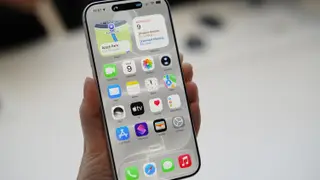
Apple is recruiting an engineer to lead the development of an AI agent capable of browsing the web, managing tasks across apps, writing code, and interfacing with services. The role involves collaboration with teams focused on Siri, UI Frameworks, and Apple Foundation Models, signaling a push to enhance Siri’s capabilities beyond voice commands. This move positions Apple to compete with AI agents from Meta, OpenAI, Anthropic, and Google.
Apple is actively recruiting a lead engineer to develop an agentic AI assistant capable of performing complex, multi-step tasks across apps, the web, code environments, and APIs. This initiative, revealed through a job listing reported by Bloomberg, signals a strategic shift beyond Siri’s current voice-command limitations. The role involves close collaboration with Apple’s Siri, UI Frameworks, and Apple Foundation Models teams, indicating a deep integration of AI capabilities into the core operating system. The agent is expected to plan and execute tasks such as browsing the web, managing files, writing code, and interfacing with third-party services—capabilities already demonstrated by competing agents like Meta’s Muse, OpenAI’s Dots, Anthropic’s Duet, and Google’s Gemini Tasks. Apple’s recent rollout of AI-enhanced Siri in September, which allows users to ask questions about screen content and perform basic cross-app actions, appears to be a precursor to this more ambitious vision. The upcoming iOS 27.3 Developer Preview will extend Siri’s AI integration to all apps, suggesting Apple is laying the groundwork for broader agent functionality. The timeline for a public release remains unclear, and it is not yet known whether Apple will launch a standalone agent or embed its capabilities directly into Siri.
This move could significantly reshape how users interact with their devices, potentially reducing reliance on manual navigation across apps and services. If Apple succeeds in delivering a seamless, secure, and intelligent agent, it may set a new standard for personal productivity tools, especially among users who value privacy and ecosystem integration. The broader AI assistant market is already competitive, with Google and OpenAI pushing forward with agents that can control computers and automate workflows. Apple’s entry could accelerate innovation in agentic AI, particularly in areas like task planning, context awareness, and cross-app coordination. However, Apple’s historically cautious approach to AI—prioritizing on-device processing and user privacy—may slow deployment compared to more aggressive competitors. The long-term impact may depend on whether Apple’s agent can match the flexibility of open models while maintaining its closed, secure ecosystem. A comparable precedent is Apple’s initial reluctance to adopt touchscreens, which later became a defining feature of its devices. What to watch for: whether Apple’s agent will be available to third-party developers, how it handles data privacy, and whether it can outperform existing agents in real-world task completion.