Gemini Now Manages Your Daily Tasks Like Scheduling and Bill Payments
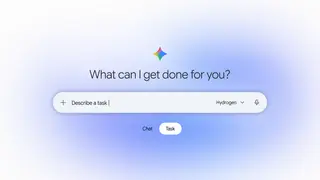
Google's Gemini app has expanded its capabilities to handle complex personal tasks such as scheduling appointments, analyzing utility bills, and purchasing groceries by integrating with users' emails, calendars, and payment methods. The feature is now free in six countries and will roll out in the U.S., with enhanced integration into Google Workspace for seamless task execution. Gemini operates within secure, hardware-isolated virtual machines to protect user data while automating routine chores.
Google has rolled out new task-management capabilities for its Gemini app, enabling it to autonomously handle complex personal chores such as scheduling appointments, analyzing utility bills, and purchasing groceries. The feature is now available at no cost in six countries—India, Japan, South Korea, Canada, Australia, and the United States—using the Gemini 4 Hydrogen model. Users can activate these functions by switching from “Chat” to “Task” mode within the app, texting Gemini directly, or forwarding emails to gemini@google.com. The system integrates with users’ existing Google accounts, including Gmail, Calendar, Google Maps, and payment methods via Google Pay and Password Manager. It operates within hardware-isolated virtual machines to ensure data security, and it does not access private information unless explicitly permitted. For example, Gemini recently scheduled a car service appointment by contacting two dealerships simultaneously, identifying available slots in the user’s calendar, and booking the appointment without human intervention. In another case, it analyzed a $389 electric bill, pinpointing excessive energy use during peak hours due to a heat pump, saving users money through actionable insights.
The expansion builds on Google’s prior investments in AI personal assistants and its broader strategy to deepen integration across the Google ecosystem. Josh Woodward, Vice President of Labs at Gemini app and AI Studio, positions the update as a response to growing user demand for automation in daily life, particularly amid busy schedules involving work, school, and household responsibilities. The move reflects Google’s effort to compete with other AI assistants by offering end-to-end task execution while maintaining security through isolated environments and protocols like Agent Payments Protocol (AP2). Future plans include integrating the Universal Commerce Protocol (UCP) for faster shopping experiences and expanding Google Wallet support to iOS. However, it remains unclear how widely businesses will adopt opt-out mechanisms for AI calls, or how regulatory bodies may respond to automated interactions with third parties.
Gemini’s new task automation could significantly reshape how individuals manage personal productivity, potentially reducing time spent on routine chores by up to 30% in early use cases. This shift may benefit users who rely heavily on digital tools for household and work coordination, especially those already embedded in the Google ecosystem. However, it raises concerns about over-reliance on AI for sensitive decisions—such as financial transactions or medical appointments—where human oversight remains crucial. The integration of payment systems via AP2 and UCP could influence broader e-commerce standards, possibly pushing other platforms to adopt similar protocols to remain competitive. A comparable precedent is Apple’s Siri Shortcuts, which enabled automation but faced criticism over privacy and inconsistent performance; Gemini’s focus on hardware-isolated execution may address some of those risks. Still, the long-term impact on customer service jobs—especially in call centers—is uncertain, though automated calls could reduce human labor in routine inquiries. What to watch for next: how users respond to AI-initiated interactions with businesses, whether regulatory scrutiny emerges around autonomous transactions, and whether third-party developers adopt Gemini’s protocols for broader interoperability.