Nationwide Flight Grounding Follows Expansion of AI Air Traffic System
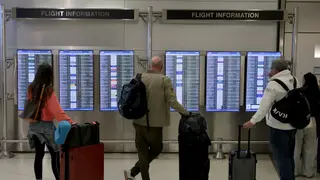
The Federal Aviation Administration (FAA) halted all U.S. flights on November 13, 2026, citing a temporary telecommunications outage and safety concerns. This rare nationwide ground stop occurred just days after the FAA expanded its AI-powered SMART system—Strategic Management of Airspace, Routes and Trajectories—to all 22 air traffic regions, following a prior test in the National Capital Region. The system, developed by L3Harris, is designed to reduce delays by analyzing weather, flight paths, traffic flow, and staffing data.
On November 13, 2026, the Federal Aviation Administration (FAA) grounded all domestic and international flights across the United States at approximately 4 P.M. EST, citing a “temporary telecommunications outage” and emphasizing safety as the primary concern. This rare nationwide ground stop followed the FAA’s full-scale rollout of its AI-powered Strategic Management of Airspace, Routes and Trajectories (SMART) system just three days earlier, on November 10, 2026. The system, developed by L3Harris, had previously undergone testing in the National Capital Region in September 2026 before being expanded to all 22 air traffic regions. Designed to analyze real-time data on weather, flight paths, traffic density, and controller staffing, SMART aims to reduce delays and cancellations through predictive optimization. The timing of the ground stop—just days after nationwide deployment—has raised questions about system stability and integration, especially given that the FAA’s telecommunications infrastructure is managed by L3Harris. The last comparable event occurred in January 2023, when a NOTAM system outage caused a 90-minute halt, and prior to that, flights were suspended immediately after the September 11 attacks. As of now, the FAA has not confirmed whether the outage was linked to SMART or another component of its infrastructure. L3Harris and the FAA have not responded to inquiries from Scientific American, leaving key details about the root cause, system resilience, and recovery timeline unresolved.
The grounding highlights the growing reliance on AI systems in critical national infrastructure and raises concerns about overconfidence in automation without sufficient fail-safes. Passengers, airlines, and logistics networks were immediately affected, with ripple effects across travel, supply chains, and business operations—particularly during a high-demand period like pre-Thanksgiving travel. The incident may prompt scrutiny of how rapidly AI systems are deployed in safety-critical domains, especially when oversight mechanisms remain opaque. A comparable precedent is the 2023 NOTAM outage, which also exposed vulnerabilities in legacy systems despite modernization efforts. This event could accelerate calls for independent audits of AI-driven aviation tools and greater transparency from contractors like L3Harris. In the near term, regulators may reassess rollout protocols for new technologies, balancing innovation with risk mitigation. The broader implication is that as AI assumes more control over complex systems, society must develop clearer standards for accountability, incident response, and public trust—especially when failures impact millions without warning.