Korea Builds Secure, Enterprise-Ready AI Agents Using NVIDIA's OpenShell and NemoClaw Frameworks
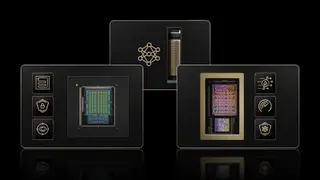
South Korea is advancing secure agentic AI through partnerships with NVIDIA, integrating platforms like OpenShell and NemoClaw to enable safe, controlled deployment of autonomous agents. Companies such as Hyundai Motor Group and AIM Intelligence are combining NVIDIA’s security infrastructure with their own agent control systems to prevent data leaks and malicious behavior. The initiative also includes open model access via LG AI Research’s K-EXAONE-2.5, trained on Korean-specific datasets.
On November 8, 2026, South Korea unveiled a coordinated push to develop secure, enterprise-ready AI agents using NVIDIA’s OpenShell runtime and NemoClaw frameworks, marking a significant step in domestic AI infrastructure. Hyundai Motor Group and AIM Intelligence are actively integrating these platforms to enable autonomous agent deployment across industrial and corporate environments, with a focus on preventing data leaks and unauthorized behavior. The integration leverages OpenShell’s sandboxed execution environment and policy-based controls to manage access to enterprise tools and govern agent actions. Meanwhile, LG AI Research made K-EXAONE-2.5 publicly accessible via API, a model trained using NVIDIA’s Nemotron datasets—specifically the Nemotron-Personas-Korea dataset, which contains 7 million synthetic Korean personas grounded in official statistics. This dataset enables models to better understand and operate within Korea-specific social, linguistic, and regulatory contexts. The initiative builds on prior efforts by NVIDIA to promote open, secure AI agent development through its Nemotron family of tools, datasets, and techniques.
The move reflects a strategic alignment between South Korea’s national tech ambitions and global AI infrastructure trends. By combining NVIDIA’s security frameworks with domestic model development and control platforms like AIM Intelligence’s Starfort, Korean firms aim to balance innovation with compliance and risk mitigation. Hyundai seeks to enhance internal workflows, while AIM Intelligence targets broader enterprise, industrial, and robotics applications. The openness of K-EXAONE-2.5 via API could accelerate adoption across public and private sectors, particularly in energy and manufacturing. However, the long-term effectiveness of these systems remains unproven, especially regarding real-world resistance to adversarial manipulation or policy evasion. It is also unclear how widely OpenShell will be adopted beyond pilot programs or whether regulatory bodies will impose additional compliance requirements.
This development could significantly influence how enterprises in Asia and beyond approach AI agent deployment, particularly in regulated industries like automotive, energy, and finance. By embedding security at the runtime level through OpenShell and grounding models in localized data via Nemotron-Personas-Korea, South Korea may set a precedent for regionally tailored, secure AI ecosystems. The integration of third-party control platforms like Starfort suggests a growing market for hybrid agent governance systems that combine platform-level safety with specialized detection capabilities. Comparable to the early adoption of containerization in cloud computing—where sandboxing became foundational—this could signal a shift toward mandatory runtime security for autonomous agents. However, widespread impact depends on whether similar frameworks gain traction outside Korea or if proprietary alternatives dominate. What remains uncertain is how these systems will perform under stress tests involving sophisticated adversarial inputs or evolving regulatory landscapes. The next phase may involve cross-border collaboration or standardization efforts, especially as AI governance becomes a geopolitical priority.