Anthropic's Claude AI now analyzes your finances using secure bank connections
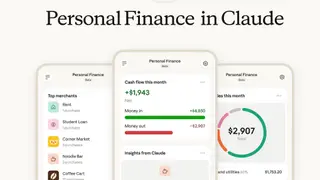
Claude AI has introduced a Personal Finance feature that securely connects to users' bank accounts through Plaid, allowing it to analyze spending patterns and answer financial questions without accessing passwords or moving funds. The tool can break down expenses by category, estimate affordability of purchases, and explain financial terms using up to two years of transaction history. It operates with read-only access and does not provide investment advice or manage money directly.
In November 2026, Anthropic launched a beta version of its Personal Finance feature for Claude AI, enabling users on Pro, Max, and Ultra plans in the U.S. to securely connect their bank accounts via Plaid, a financial data infrastructure provider. The feature grants Claude read-only access to up to two years of transaction history, account names, balances, credit limits, and the last four digits of account numbers—without ever seeing passwords or moving funds. Users can now ask questions like “Where did my money go this month?” or “Can I afford a vacation?” and receive categorized spending breakdowns, affordability estimates, and explanations of financial terms. The integration follows OpenAI’s similar move with ChatGPT in May 2026, signaling a broader trend of AI tools embedding into personal finance workflows. Anthropic emphasizes that Claude does not provide investment advice, manage money, or execute transactions, positioning the tool as an educational and analytical aid rather than a financial manager. The company also invites collaboration with banks, wealth managers, and financial institutions to shape future integrations, suggesting a long-term vision of AI as a complementary tool within regulated financial ecosystems.
This development could reshape how individuals interact with their financial data, potentially increasing financial literacy by making complex spending patterns and terms more accessible through conversational AI. Users may gain quicker insights into budgeting, saving, and spending habits, possibly leading to more informed decisions. However, the broader impact hinges on trust—especially given the sensitivity of financial data. While Plaid’s role mitigates direct access risks, the accumulation of transaction history in AI systems raises privacy concerns, particularly if data is used for training or shared beyond intended purposes. A comparable precedent is the rise of fintech apps like Mint or YNAB, which also aggregated financial data but faced scrutiny over data usage and security. If widely adopted, such AI tools may pressure traditional financial institutions to innovate or partner with AI providers, altering the competitive landscape. What remains uncertain is how regulatory bodies will respond to AI’s growing role in financial decision-making, especially as users increasingly rely on AI for guidance. The next phase may involve deeper integrations with licensed professionals, but whether such partnerships will be scalable or secure remains to be seen.