Intensified El Niño Triggers Widespread Flooding Across U.S. Southwest and Florida
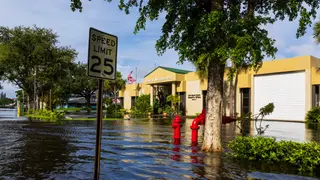
A powerful El Niño event, amplified by climate change, has caused severe flooding in Florida’s central coast and the Four Corners region of the Southwest, submerging homes, destroying roads, and disrupting communications. Meteorologists report that back-to-back storms have left infrastructure in ruins, with many areas still inaccessible due to mud, debris, and washed-out roads. Scientists note this extreme weather is a direct consequence of both the strong El Niño pattern and unprecedented ocean warming driven by global climate change.
In November 2026, the U.S. Southwest’s Four Corners region—encompassing parts of Colorado, New Mexico, Utah, and Arizona—and Florida’s central coast endured catastrophic flooding due to a powerful El Niño event intensified by climate change. In Malabar, Florida, 24 inches of rain fell in just 36 hours between November 1 and 2, marking a once-in-1,000-year rainfall event, with an estimated 1.9 trillion gallons of water deluging the area in a single day. In Pagosa Springs, Colorado, the San Juan River peaked at 16.81 feet—surpassing a previous 15-foot crest—after back-to-back storms that followed a 100- to 1,000-year rainfall event just over a week earlier. Infrastructure damage was widespread: roads were rendered impassable by mud and debris, fiber cables were severed, and communication networks failed, isolating communities. The National Weather Service and climate scientists, including Daniel Swain of UC Agriculture and Natural Resources, attribute the extreme precipitation to a combination of a strong El Niño and record ocean warming—off the Baja California coast, sea surface temperatures were 11 to 12°F above average, while Atlantic waters near Florida were also anomalously warm, fueling storm systems with unprecedented moisture. These conditions are not isolated; Ecuador and Peru have similarly experienced extreme rains and floods. The event follows a pattern of increasing climate extremes, with the Four Corners region having suffered severe flooding in October 2025. The NWS Climate Prediction Center forecasts a strong to very strong El Niño through March 2027, suggesting continued risk of winter storms in Florida and shifting flood threats to California. What remains uncertain is how long such extreme conditions will persist and whether infrastructure and emergency response systems can adapt to this new normal.
The flooding events in Florida and the Four Corners region could significantly disrupt regional economies, particularly in agriculture, tourism, and insurance. Damage to roads and communication networks may delay recovery efforts and strain emergency services, especially in rural areas. The repeated occurrence of once-in-a-millennium events within a two-year span suggests that climate adaptation strategies may be insufficient, potentially leading to increased public demand for federal aid and infrastructure investment. Comparable to the 2017 Hurricane Harvey floods in Texas, which prompted widespread scrutiny of floodplain development and urban planning, this event may prompt renewed debate over land-use policies and climate resilience in vulnerable coastal and arid regions. Insurance markets may respond with higher premiums or reduced coverage in high-risk zones, affecting homeowners and businesses. The role of climate science in public policy could grow, as agencies like the NWS and academic researchers like Swain and Schumacher gain visibility. What may follow is a broader push for early-warning systems, improved stormwater management, and climate-informed zoning—though the pace and scale of such changes remain uncertain.