Strong El Niño and record sea levels threaten California coast with severe winter flooding
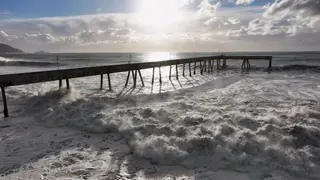
Record-high ocean levels along California’s coast, driven by climate change and the current strong El Niño event, are increasing the risk of severe flooding and coastal erosion. Hurricane-force winds and king tides are already causing widespread damage, with waves exceeding 50 feet and seawater inundating low-lying areas. Experts warn that infrastructure, including highways and wastewater systems, could face significant harm during the upcoming winter months.
In late October and early November 2026, California’s coast experienced extreme coastal flooding and wave activity, with waves exceeding 50 feet in San Mateo County, seawater inundating homes in Mission Beach and Seal Beach, and significant damage reported in Newport Beach and Orange County, where six homes were deemed uninhabitable. These events occurred during the first of three upcoming king tides—scheduled for November 24–26, December 23–25, and January 21–22—when tidal levels are expected to be half a foot to a foot higher than usual. The current conditions are driven by a confluence of factors: record-high sea levels due to long-term climate change (4–9 inches of rise over the past century), a historically strong El Niño event that may be the most intense in 1,000 years, and a marine heatwave with temperatures 10°F above average in areas like San Diego, Santa Barbara, and Monterey Bay. The warm waters have caused thermal expansion, adding 6–20 inches to sea levels. Scientists including Daniel Swain (UC Agriculture and Natural Resources) and Mark Merrifield (UC San Diego) warn that El Niño alone could bring 25 days of sea levels above typical king tide thresholds by year’s end, with storm surges potentially compounding the damage. The University of California, Santa Cruz’s Christina Richardson notes that 80% of coastal erosion in California occurs during El Niño winters, heightening concerns about infrastructure like highways and wastewater systems. The full extent of damage remains uncertain, as the most critical periods are still ahead.
The escalating coastal flooding in California could disrupt transportation, compromise public health through wastewater overflows, and strain emergency response systems, particularly in low-lying urban zones like San Francisco Bay Area and Orange County. Property values in vulnerable coastal communities may decline, and insurance markets could face increased pressure, especially if repeated flooding leads to long-term risk assessments. The situation echoes the 2015–2016 El Niño, which caused significant damage but was less intense than the current event. However, the added weight of persistent sea-level rise and marine heatwaves may amplify impacts beyond past events. Municipalities may be forced to accelerate infrastructure adaptation plans, though funding and regulatory hurdles could delay action. The public may increasingly demand climate resilience measures, potentially influencing future policy and investment. What remains uncertain is how quickly local governments can mobilize resources, whether federal aid will be deployed, and how communities will adapt to recurring threats. The coming months will be critical in determining whether preparedness strategies can mitigate long-term damage.