DIY AI Pendant Outshines Meta's Muse Charm with Custom Features
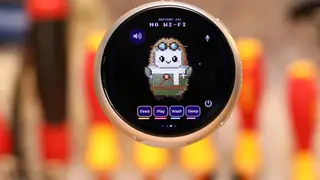
The author constructed a custom AI-powered wearable pendant using a low-cost ESP32-S3 development kit, beating Meta’s upcoming Muse Charm to market. The device features a touchscreen, voice interaction, customizable avatars, and functions as a pocket watch and smart home controller. While lacking built-in cameras or cellular connectivity, it demonstrates how accessible hardware can enable personal AI experimentation.
In October 2026, journalist Sean Hollister built a custom AI-powered wearable pendant using a Waveshare ESP32-S3 1.75C development kit purchased for $50 from China, beating Meta’s upcoming Muse Charm to market despite the company’s official endorsement of the same hardware as a platform for its Muse AI ecosystem. The device features a 1.75-inch touchscreen, push-to-talk voice interaction, and integrates with Meta’s open-source Muse AI cloud via API keys, allowing direct access to the AI assistant. While lacking built-in cameras or cellular connectivity, Hollister enhanced it through AI-assisted coding—using Claude (Anthropic’s AI) to add a conversation history interface, enable audio playback via a British voice from ElevenLabs, implement remote camera control with live preview over Bluetooth, and create a Tamagotchi-style interactive pet game with evolving needs like hunger, play, sleep, and hygiene. The project highlights how accessible hardware and generative AI tools are enabling individual users to customize AI experiences beyond corporate product constraints. Meta’s Muse Charm, expected to launch around the same time, offers similar form factor and branding but lacks full user programmability in its initial release. Hollister’s work underscores a growing trend where DIY developers leverage open platforms to surpass commercial offerings in flexibility and personalization.
This story illustrates how generative AI tools like Claude are lowering barriers to hardware customization, enabling non-experts to create personalized AI experiences that outperform early commercial products. The broader impact may be a shift in consumer expectations—users might increasingly demand modularity and open access over proprietary lock-in, challenging tech giants’ control over device ecosystems. As seen with the open-source movement in software, democratized hardware development could spur innovation beyond corporate R&D cycles. Comparable to how early smartphone users jailbroken devices to unlock features before official updates, this DIY approach may accelerate feature adoption in mainstream products. However, long-term sustainability remains uncertain: reliance on third-party AI for code generation introduces risks around security, dependency, and support. What’s next could include more consumer-grade development kits with built-in AI assistance or even Meta expanding open access to its Muse platform—though whether they will embrace user-driven innovation or maintain tight control remains unclear.