Tactile Data Breakthroughs Give Robots a Sense of Touch
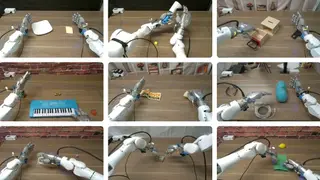
Dexterous manipulation remains a major obstacle for robots in everyday tasks, largely due to insufficient tactile data. Academic labs and startups are now developing new datasets and techniques to address this gap. Advances in vision-language-action models have improved robot performance, but integrating touch is seen as the next critical step.
Robots continue to struggle with tasks requiring fine motor control, such as grasping irregular objects or handling delicate materials. A primary bottleneck is the scarcity of high-quality tactile data, which limits how effectively systems can interpret physical contact. Researchers in academic settings and private startups are responding by building new datasets and refining sensing techniques to capture richer touch information.
Recent progress in vision-language-action models has notably enhanced robotic planning and execution, yet these systems still rely heavily on visual input. Integrating touch is emerging as the next frontier, promising more robust interaction with the physical world. This convergence of modalities could unlock more reliable performance in unstructured environments, moving robots closer to practical deployment in homes and workplaces.
Widespread adoption of tactile-enabled robots could reshape labor markets, particularly in warehousing, healthcare, and domestic assistance, where delicate handling is essential. Businesses may see efficiency gains, while workers might face job displacement or require new skills. Consumers could benefit from safer, more capable service robots, but affordability and reliability remain open questions. The technology's trajectory may also influence safety standards and human-robot interaction norms, though its full societal reach depends on continued research and deployment choices.