A Microduck Robot Learns in Isaac Lab 3.0 Before Moving to the Real World
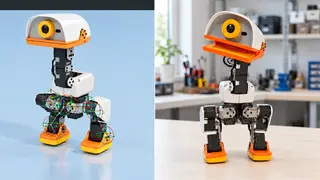
The post outlines a pipeline for teaching a robot in simulation and then running the resulting policy on physical hardware. It demonstrates the process with Microduck and Isaac Lab 3.0.
The story centers on a simulation-to-hardware workflow: a robot is trained in software before its learned policy is deployed on a physical unit. Microduck and Isaac Lab 3.0 serve as the demonstration case, showing how the pipeline connects simulated learning to real-world operation.
Because only the headline and summary are available, details such as hardware design, training methods, and performance are not specified. The described approach is presented as a pipeline rather than a product announcement.
If such simulation-to-hardware pipelines are accessible through open-source tooling, robotics developers, researchers, and smaller teams could prototype and test policies with less dependence on physical trials. That may reduce costs and iteration time, while also raising questions about safety and validation when simulated behavior moves to real machines. The immediate impact is likely limited to those working with similar robot platforms.