White House Agreement Enlists Six AI Firms in Voluntary Safety Pledges
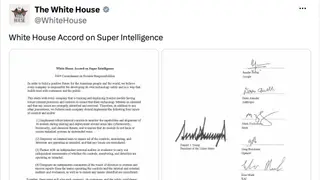
Six leading U.S. AI companies signed a White House document laying out voluntary safety commitments. The agreement asks firms to monitor models during training and use, create an internal oversight team, arrange independent outside assessments, and have a board committee receive evaluation reports. It keeps self-regulation in place while noting that some commitments might later be written into law or regulation.
On September 29, President Trump met with representatives from major U.S. AI developers and released the “White House Accord on Super Intelligence.” OpenAI, Anthropic, Google, Meta, xAI, and Nvidia signed it. The document describes four voluntary steps: monitoring models during training and use, creating an internal oversight group, obtaining independent outside reviews, and having a board committee receive evaluation reports.
The accord preserves self-regulation while suggesting some measures could eventually become law or regulation. It also says signatories will meet regularly to develop shared standards and practices. That cooperation may matter because coordinated safety discussions among competitors can raise antitrust questions.
The accord may affect AI developers, their employees, consumers, and regulators by normalizing internal and external safety checks without binding rules. Because participation is voluntary, public protection could depend on company follow-through and board oversight. Regular industry meetings might improve shared practices, but may also invite scrutiny over competition. If commitments are later codified, compliance costs and legal obligations could grow; if not, accountability gaps may persist.