Physical AI and Robotics Emerge as Solutions for Modern Security Infrastructure Threats
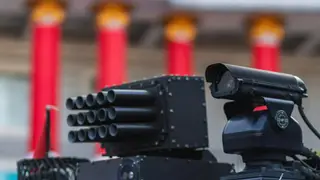
Organizations are increasingly turning to robotics and artificial intelligence to address evolving physical security threats at critical infrastructure sites, with over $23 billion invested in 2026 alone in companies developing these integrated technologies. The convergence of cyber and physical security vulnerabilities, demonstrated by incidents like the Jaguar Land Rover breach, has created urgent demands for adaptive, intelligent systems that can prevent rather than merely react to threats. When deployed responsibly, physical AI agents offer scalable capabilities to protect sensitive assets while managing legacy system constraints and countering sophisticated adversaries.
The convergence of digital and physical security systems has created significant vulnerabilities for organizations managing critical infrastructure. When networked security components—such as surveillance networks, access controls, and sensor arrays—share a common platform, a successful cyberattack can compromise multiple layers of protection simultaneously. The 2025 Jaguar Land Rover incident exemplified this risk, where attackers exploited stolen credentials to infiltrate operational systems, ultimately shutting down manufacturing facilities and causing substantial economic damage to the broader economy.
Modern security operations increasingly rely on aging infrastructure that forces reactive rather than anticipatory responses to threats. This limitation becomes particularly problematic as geopolitical instability and socioeconomic tensions create more frequent and sophisticated attack scenarios. Roboticized security systems equipped with machine learning capabilities offer organizations the ability to shift from damage control to threat prevention through continuous environmental monitoring and real-time anomaly detection.
The adoption of physical AI agents in critical infrastructure security could significantly reshape risk management across industrial sectors, potentially reducing downtime and economic losses from security breaches. However, widespread deployment of autonomous security systems may raise questions about surveillance oversight, decision-making transparency in threat response, and the concentration of security functions in fewer technological platforms. How organizations implement these systems—balancing protective capabilities against accountability and privacy considerations—could influence broader public acceptance of embodied AI in sensitive operational environments.