Anthropic policy chief argues AI safety requires binding rules, not voluntary pledges
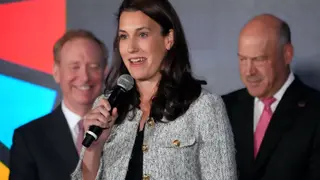
Anthropic's head of public policy, Sarah Heck, said at a Washington summit that AI companies should not be expected to self-regulate through an honor code. She expressed a desire to collaborate with government to determine appropriate oversight. Her remarks follow CEO Dario Amodei's recent call for the industry to deliberately slow model advancement.
Heck’s remarks at the Politico Decoded summit follow a turbulent week for AI governance, marked by Anthropic CEO Dario Amodei’s surprise proposal to slow model development. That plan drew quick endorsements from OpenAI’s Sam Altman, SpaceX’s Elon Musk, and Google DeepMind’s Demis Hassabis, while Nvidia’s Jensen Huang and Meta’s Mark Zuckerberg pushed back, arguing safety and speed can coexist. Zuckerberg noted Meta delayed its Muse agent for months to address security concerns, but stopped short of backing industry-wide slowdowns.
The debate highlights a widening split among tech leaders over whether voluntary restraint or binding oversight is the right path. Heck’s insistence that companies “can’t be checking our own homework” signals a shift toward formal government involvement, though no specific regulatory framework has been proposed. Her comments arrive as researchers warn of catastrophic risks, adding urgency to the policy conversation.
This story could reshape how AI oversight evolves, moving the burden from corporate self-policing to government mandates. If binding rules emerge, companies may face slower release cycles and higher compliance costs, potentially affecting innovation and market competition. Consumers and businesses relying on AI tools could see more cautious deployment, but also greater assurance against harmful failures. The split among executives suggests uneven adoption, which may create regulatory friction across jurisdictions.