Bioweapons Risks Exist Independent of Artificial Intelligence, Author Argues
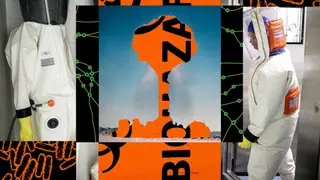
A new book on biological warfare by Annie Jacobsen examines the dangers of weaponized pathogens without focusing on AI, noting that scientists already possess the capability to engineer extinction-level biological threats. The piece highlights a recent case where researchers attempted to use AI chatbots to bypass safety guidelines for gain-of-function research, which involves enhancing pathogens' infectiousness or lethality. The author argues that genetic engineering presents inherent dual-use challenges regardless of AI involvement, as the same knowledge can advance both defensive countermeasures and offensive weapons development.
The article examines Jacobsen's recent book exploring biological warfare scenarios, which deliberately avoids attributing bioweapon risks primarily to artificial intelligence. Instead, it emphasizes that the scientific knowledge required to create dangerous pathogens already exists within the research community. A documented incident involving researchers attempting to use AI language models to circumvent safety restrictions on pathogen enhancement work illustrates how dual-use technology—capabilities applicable to both beneficial and harmful purposes—complicates biosecurity. The author notes this tension has long existed in genetic engineering independent of AI's development.
This story may influence public discourse around biosecurity priorities by challenging assumptions that artificial intelligence represents the primary threat vector for biological weapons development. Policymakers, scientists, and security professionals might reconsider resource allocation for oversight mechanisms in genetic research. The narrative could also shape public perception of whether AI regulation should focus on bioweapons prevention or address broader governance gaps in pathogen research that predate modern AI systems.